The least dazzling site on the Palatine Hill may be, in fact, the stuff of legend — the home of the mythical founder of Rome, Romulus. Yes, that Romulus, the brother of Remus, the sons of a god and a vestal virgin, abandoned in a basket by the Tiber and suckled by La Lupa, the majestic She-Wolf of Rome.
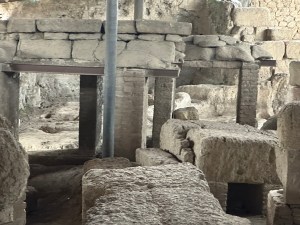
The site is very near the House of Augustus (Augustus may have intentionally wanted to live near this site as a propaganda move), under a slanted roof. There clearly were lots of structures built in this area over the centuries.
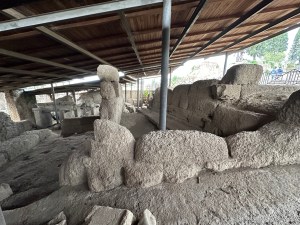
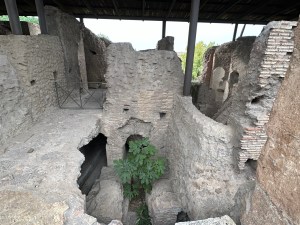
It’s certainly not much to look at. You have to look carefully to find the critical archaeological feature. It’s not the walls and giant stone blocks. What’s important at this site is the little area where you can see some small round holes in the ground. Those holes show where wood posts once stood; those posts once held up a crude little round hut. And that is where it all began.
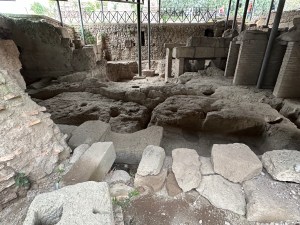
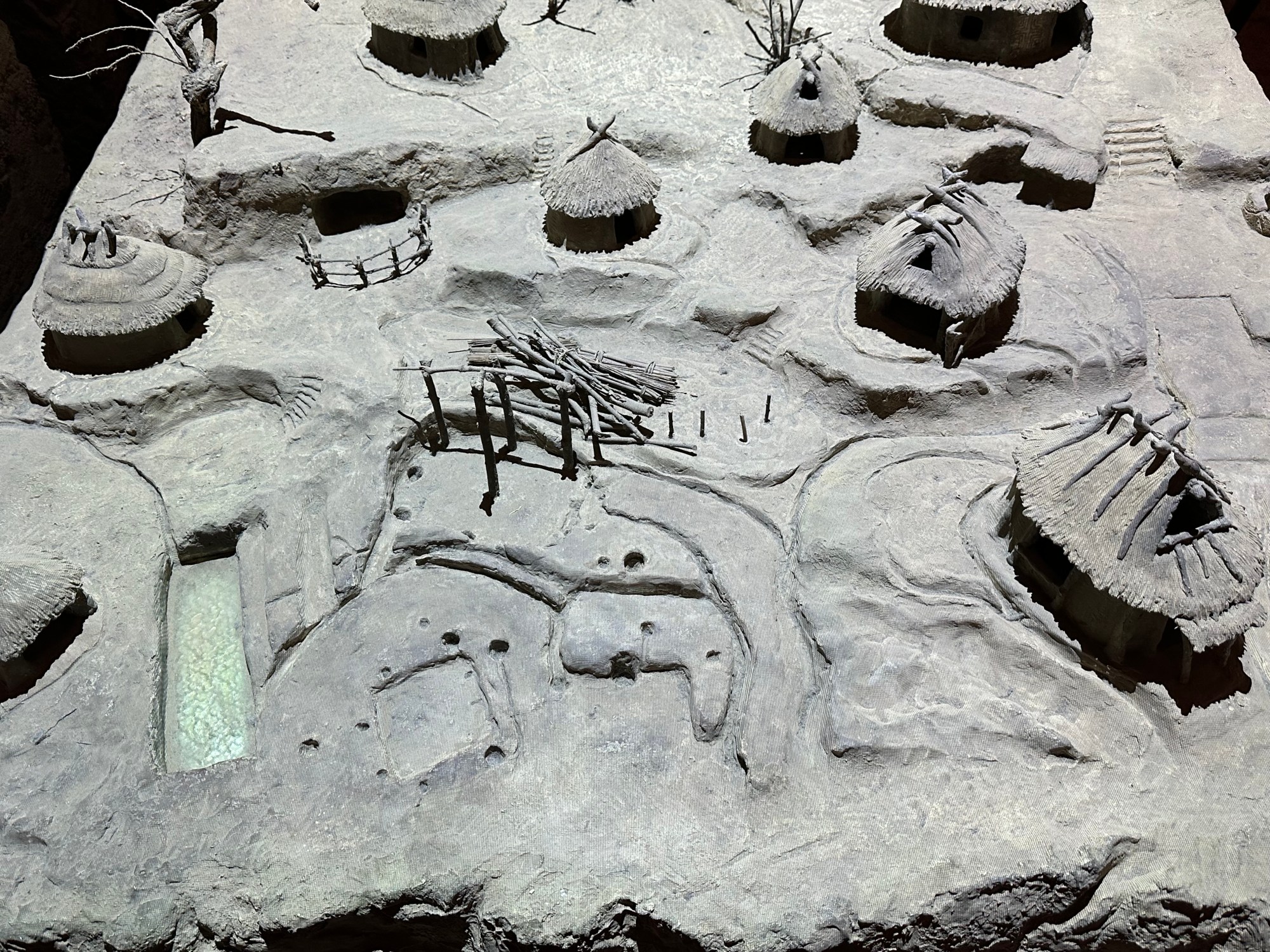
Once upon a time in the Iron Age — this site is dated from 900 to 700 B.C.E. — the Palatine Hill hosted a number of little huts, depicted at the top of this post. The Parco Archeologico del Colosseo has a model of a hut here.
Despite the fact Romulus became the first “king” of Rome, these huts (the “Casa Romuli“) were small, single-room structures built with wooden support posts, with walls of inter-woven branches or reeds covered in mud or clay (“wattle and daub”), and thatched straw roofs. Later miniature ceramic cremation vessels give us another idea of what they looked like.
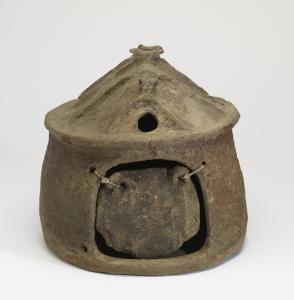
Even if Romulus is a myth, we know that Rome’s earliest inhabitants lined here. So, amid all the amazing places in the Roman Forum and Palatine Hill, this very modest site is where the Eternal City began.


