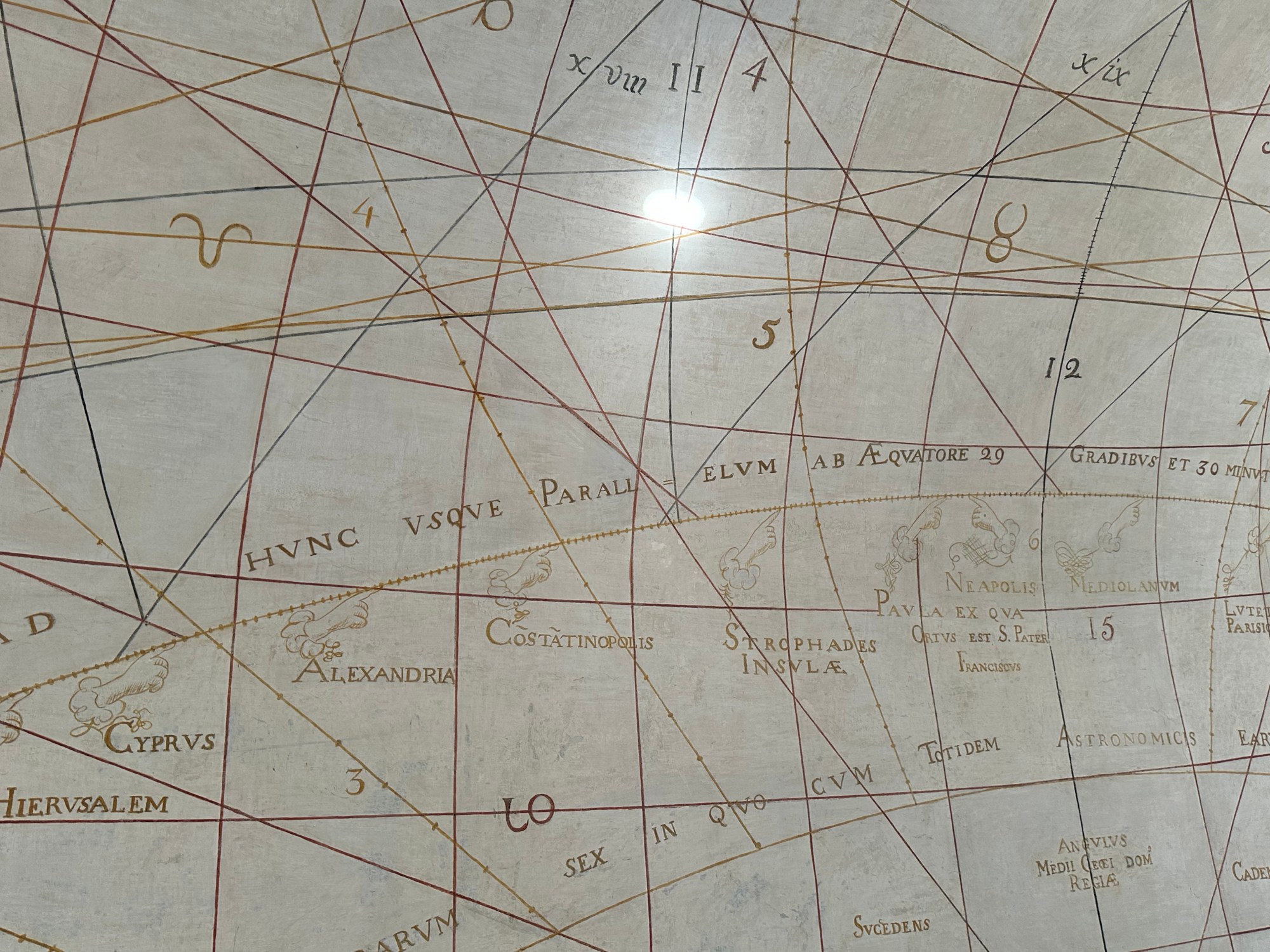
The convent at the top of the Spanish Steps is home to a little-known, but amazing scientific creation: a catoptric astrolabe created by Friar Emmanuel Maignan in 1637. By catoptric, it refers to the fact that a ray of sunlight comes through a tiny hole in the wall and reflects off a mirror to show the position of the sun and the stars, the time of day, and much more. There’s the spot of light, on the back wall, at the top of this post.
This astronomical clock extends along an entire corridor of the convent, covering the ceiling and the walls. It’s everywhere around you. It’s also mind-boggling. And, at almost 400 years old, it’s all original.
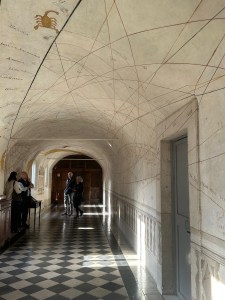
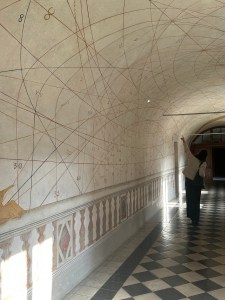
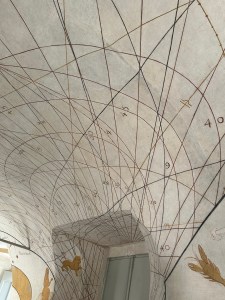
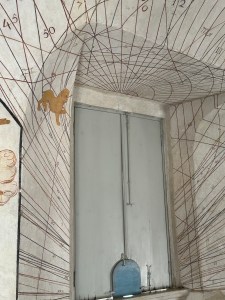
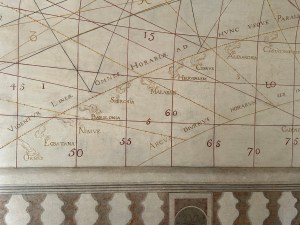
There are lines crossing, and symbols, everywhere.
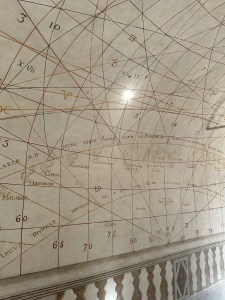
Painted on one of the walls is a key to the symbols, showing some of the planets (plus the Moon) at a specific time of day (hora diei) or night (hora noctis). These numbers and symbols are scattered throughout the hall.
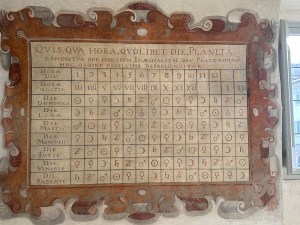
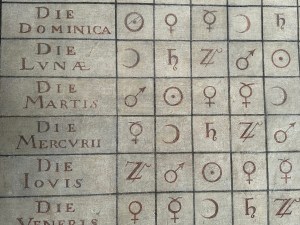
There’s also little charts of the constellations.
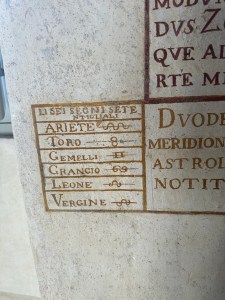
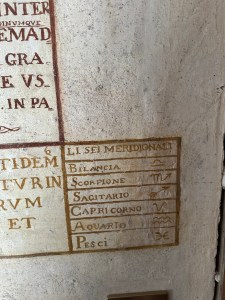
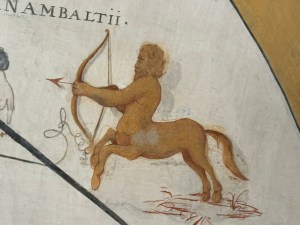
Here and there, there are very pretty representations of the constellations.
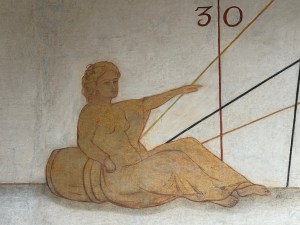
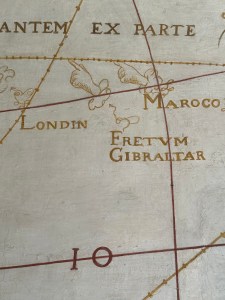
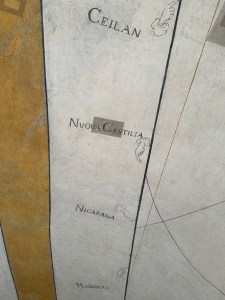
Then there are markers to indicate different known places around the world.
Then, there’s this:
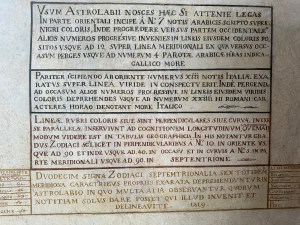
With the help of Google Translate, apparently the first part reads,
“You will know the use of the astrolabe if you read this carefully. In the eastern part, start from the number 7, written in black letters. From there, progressing towards the western part, you will progressively find other numbers placed on lines of the same color up to 12 on the southern line, from which you will continue towards the west up to the number 4, indicated by the Arabic numerals in the French manner.”
Instructions from Friar Emmanuel himself, coming to us direct from 1637, on how to use his wonderful creation. Amazing!


