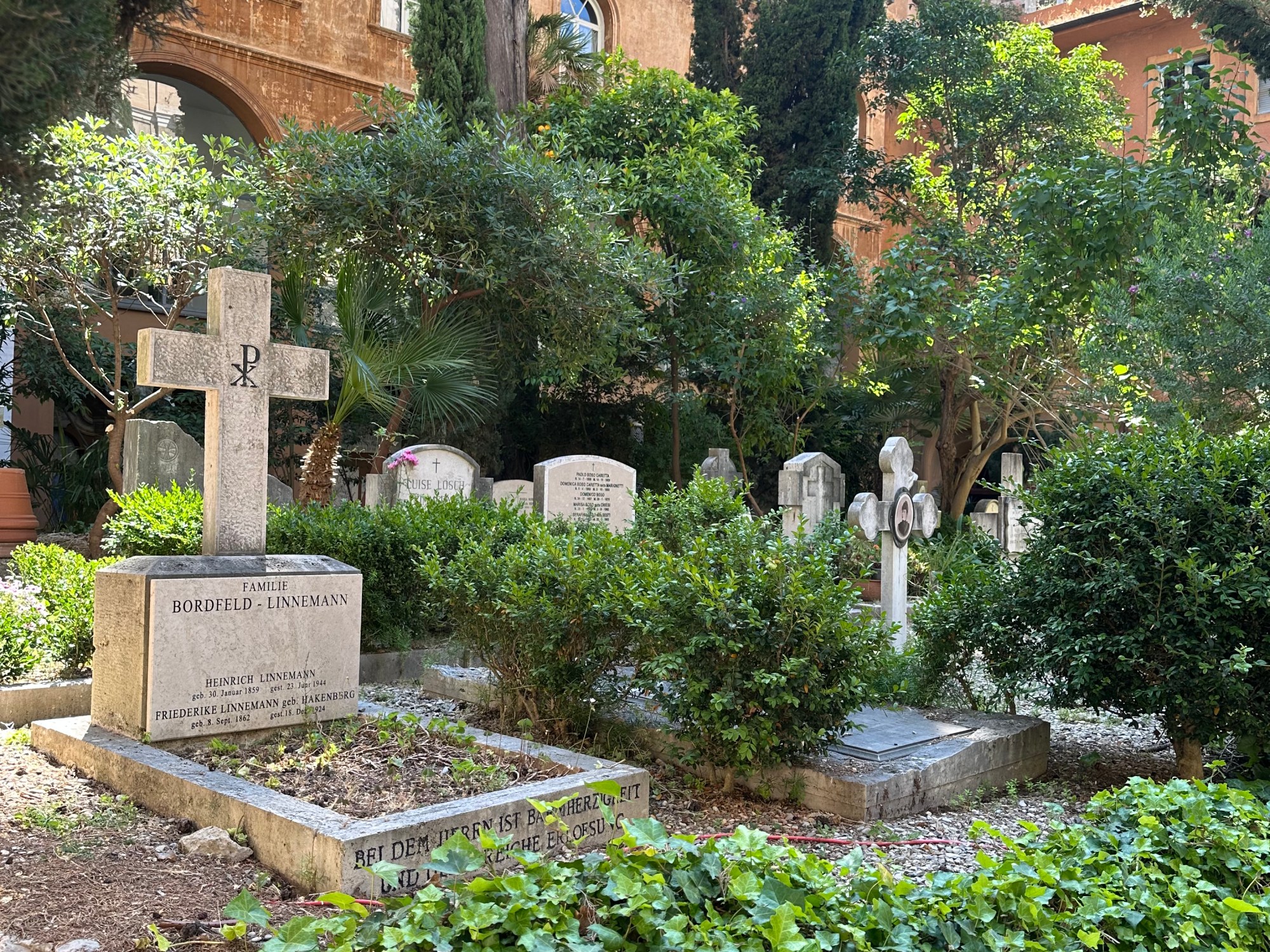
Tucked away on one side of Saint Peter’s Square is a beautiful little place, which most tourists to the Vatican don’t know about. But it is lovely and well worth a visit.
To get there, you do not need an appointment, but you do need to go in the morning because it closes around noon. Once arrived, you follow the left/south colonnade around the square to the security line, which usually will be empty or nearly empty with just a few people going to the Scavi tour. After the security line, you present yourself to the Swiss Guards, and cross your fingers that they will let you pass through.

We had tried to get in previously, but to no avail. This morning, however, we somehow passed muster and were let in. It was a very short walk from there to where we were headed.


So, we finally arrived at the Teutonic Cemetery.

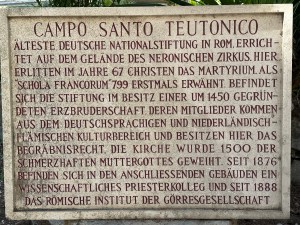
According to Google translate, the sign reads, “Oldest German national foundation in Rome, built on the grounds of the Neronian Circus. Here, in the year 67, Christians suffered martyrdom. First mentioned as Schola Francorum in 799, the foundation is now owned by an arch-confraternity founded around 1450. Its members come from the German-speaking and Dutch-Flemish cultural area and have the right to bury people here. The church was dedicated to Our Lady of Sorrows in 1500. Since 1876 the adjacent buildings have housed a scholarly priests’ college, and since 1888, the Roman Institute of the Görres Society.”
The land was given by Pope Leo III to Charlemagne (whom the pope later crowned as emperor) in 799 to establish a hospice (the Schola Francorum) for German pilgrims who became ill in the Eternal City; the graveyard was established for those poor souls who never made it home.
Legend has it that the soil here is sacred earth brought to Rome from Jerusalem. Whether the legend is true or not, this place has a special, peaceful feeling.

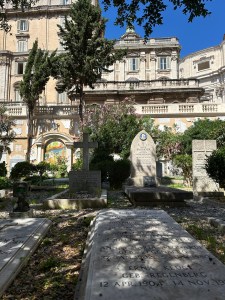
Everywhere you look, there is a monument of some kind.
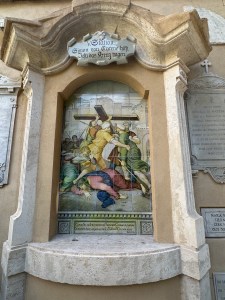

The cemetery is so tiny that the graves have been piled up over time.

There were a number of people there the day we went, several in full military dress.

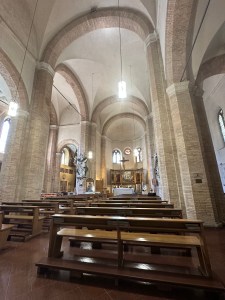
There is also a small, rather plain chapel — a calm and gentle contrast to the baroque splendors of many Roman churches.

It has not always been a peaceful place like it is today. On May 6, 1527, during the Sack of Rome, Pope Clement VII‘s Swiss Guards had their “last stand” here, fighting German troops in brutal hand to hand combat and holding them back just long enough for the pope to flee to the nearby papal fortress of Castel Sant’Angelo. Fittingly, the Swiss Guards are one of the privileged few who can still be buried here.


 The Spanish Steps Apartment on Via della Mercede