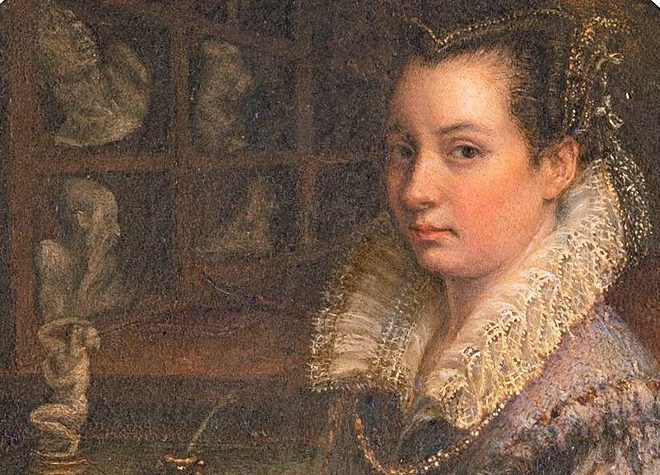
My last two posts mentioned the “Lavinia” art installation at the Loggia dei Vini in Villa Borghese. But who was Lavinia?
Born in Bologna in 1552, Lavinia Fontana was a painter. Her father, Prospero Fontana, was a painter, and he encouraged his daughter’s own artistic talent. By her twenties, she was garnering commissions.
In 1577 she married Gian Paolo Zappi, Count of Imola, who was one of her father’s students. As a wedding gift to her husband’s family, she painted a self portrait. In this portrait, she sits at a virginal (a harpsichord type instrument), elegantly dressed, and quietly confident. It’s an allusion to her own virginity and demonstrates that she had musical training befitting a fine young lady.

This lovely painting today is in the collection of Rome’s Accademia de San Luca, an academy of artists in Rome, now known as the Accademia Nazionale di San Luca. The Accademia is located near our apartment, on the way to the Trevi Fountain. Livia Fontana went on to become the first woman member of the academy, which included notables such as Bernini, Piranesi, and Reni.
What’s unusual is that her wedding contract specified that she would continue her career as a painter (bringing in money in lieu of a dowry), and that she would not do any housework (way to go, Lavinia!). Clearly, her new husband was happy with this novel arrangement. He assisted his wife in her studio (apparently painting background details in her paintings), handled the business side of her career, and cared for their 11 (!) children. She must have been a very busy lady.
Fontana produced many portraits of noblewomen and their children, and sometimes their little dogs as well. Here are just a few.


She also produced the obligatory mythological scenes and religious subjects.
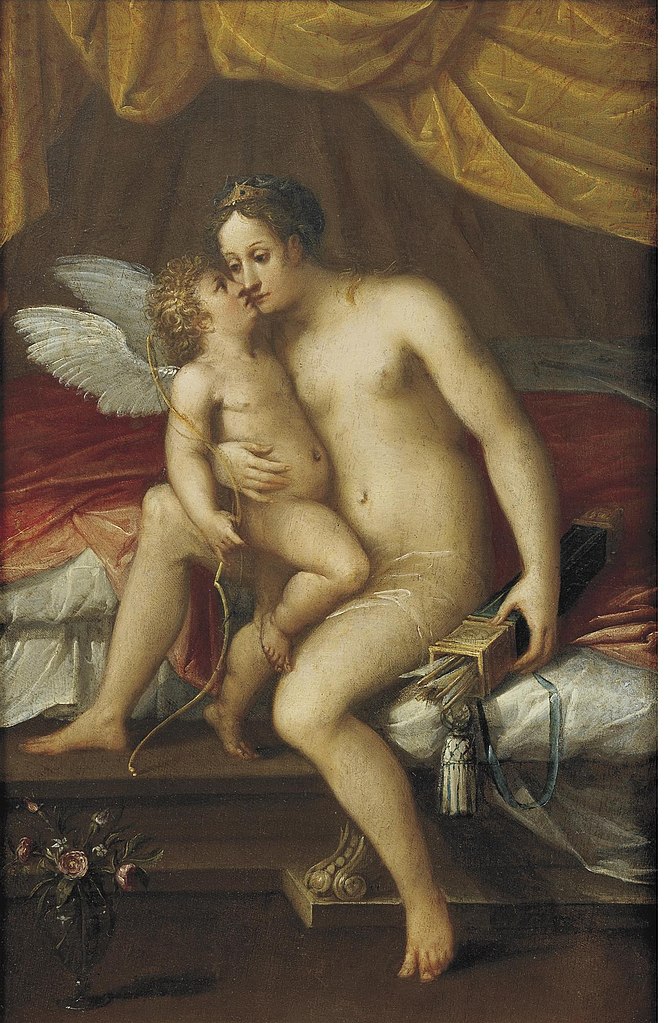

Besides an atypical career as a professional artist, Fontana further pushed the envelope by painting nudes — something that women artists had not done before. It would have been socially unacceptable at the time for women to paint nudes even if they attended art school.
Her career eventually led her to move to Rome in 1604, where she would spend the rest of her life. In Rome, she found a patron in Pope Gregory XIII (the calendar pope) whom she painted. She also became friends with the future Pope Paul V, who became a godparent to her youngest son. Apparently, Lavinia cultivated friendships with her subjects — who were all people of wealth and power — and then asked many of them to be godparents to her children. A very clever woman, indeed.

Her final painting hangs in Galleria Borghese. It depicts Minerva, the goddess of War, abandoning her armor and weapons and preparing to don a feminine gown.
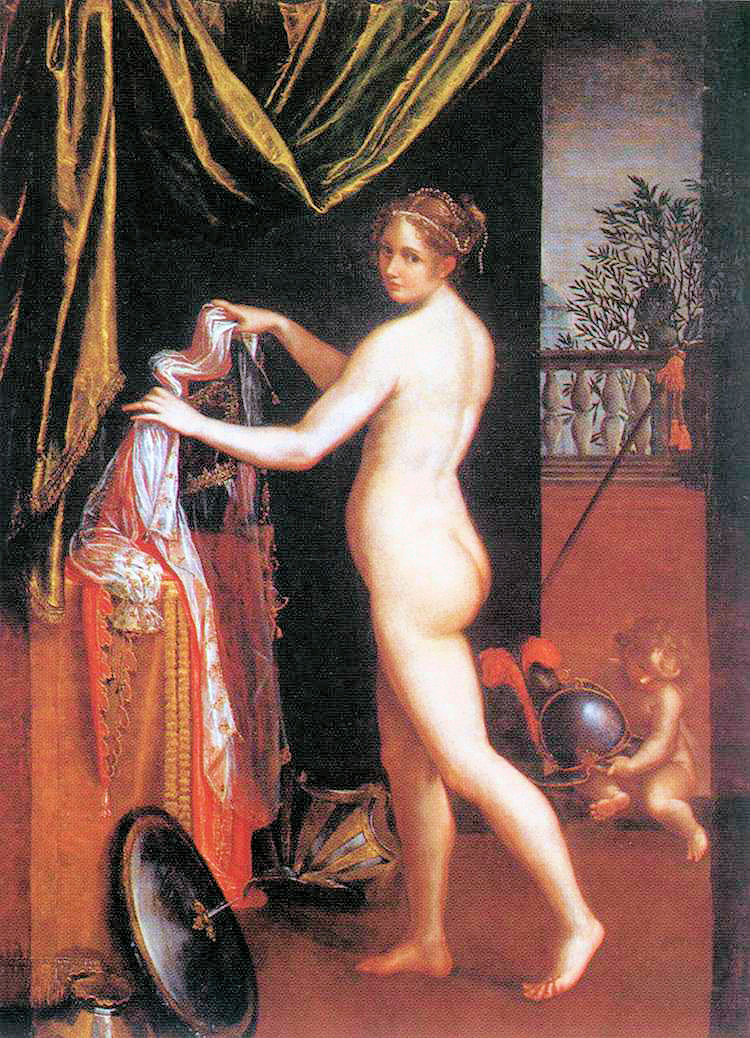
Lavinia died in Rome in 1614 at age 62, and, most appropriately, considering the name of her last painting, is buried in one of my favorite churches, Santa Maria sopra Minerva.

 The Spanish Steps Apartment on Via della Mercede