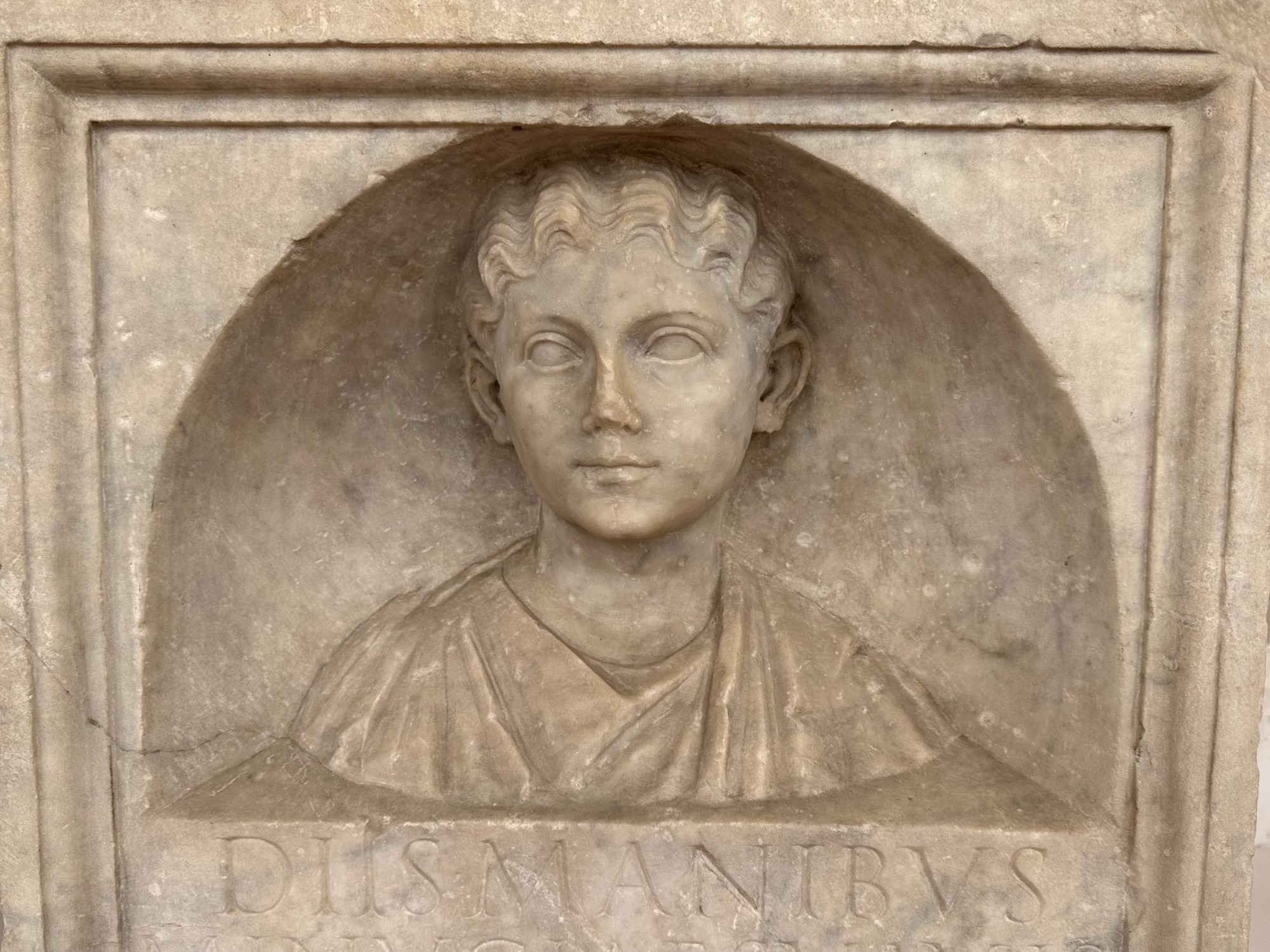
Ancient funerary monuments tell us so much about Roman culture. The Baths of Diocletian complex is filled with funerary monuments, and many of them include text. There are actually a couple hundred grave markers and funerary monuments in the gardens alone, meaning before you even enter the museum.


One you get inside the museums, you find hundreds and hundreds more. I spent hours here reading these epitaphs, imagining the moments, sounds, and sights of the lives of the people they described so long ago.
Some of these monuments are very modest but speak volumes. This marker reads, “Eros, Posidippus’ cook, slave, lies here.” A man’s entire life, summed up in six words.

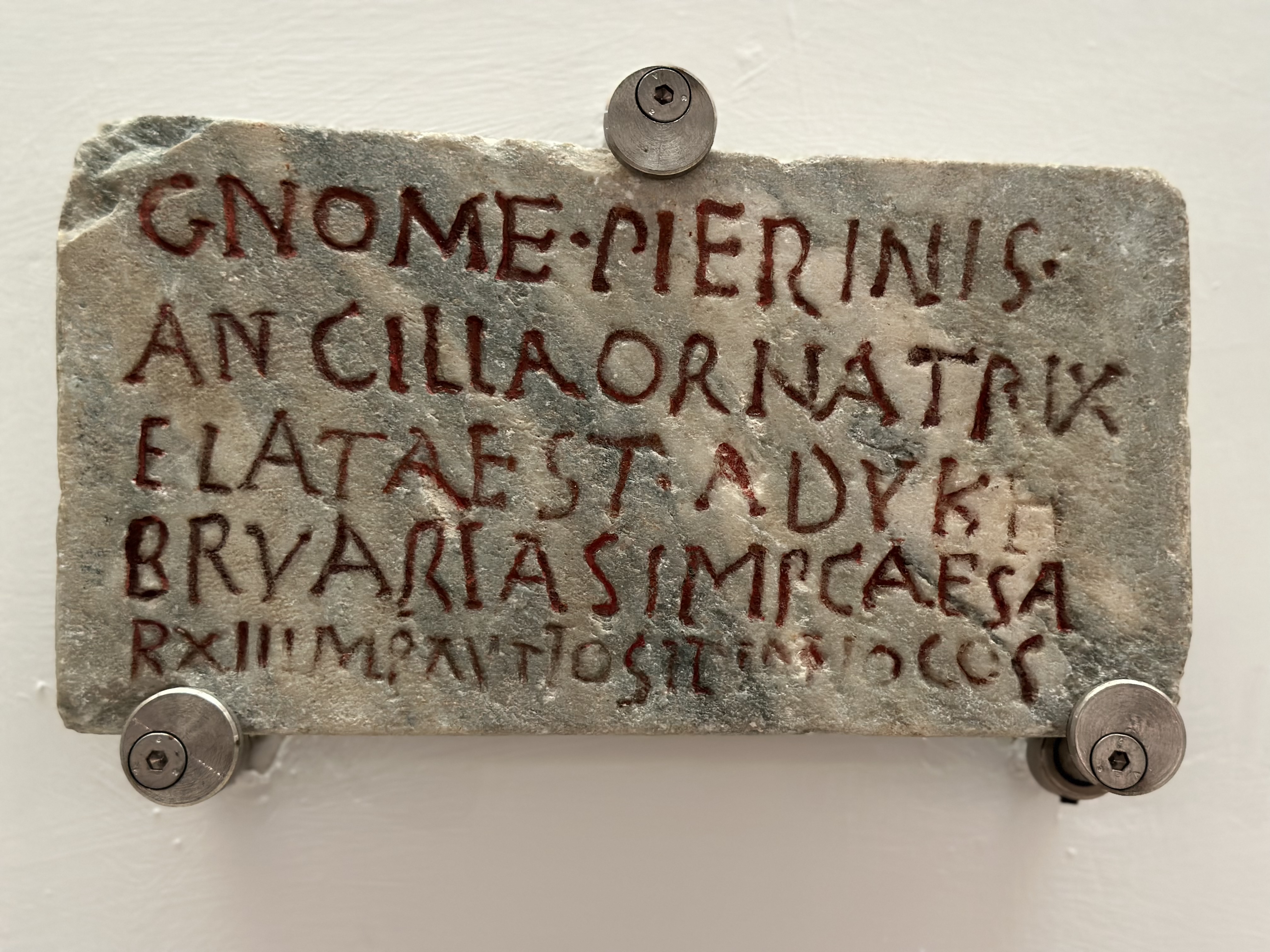
Then there is the simple monument to “Gnome.” It says that she (I assume it’s a she) was a maid to (I assume) a woman named Pieris. But it also says that before she was a maid, Gnome was a hairdresser. She was buried on January 2, in the year 2 C.E. Clearly the person who commissioned this tiny marker was proud of the fact that Gnome had once been a hairdresser, or perhaps they knew that Gnome herself was proud of that fact. But now, touchingly, we know too.
This monument, in a mix of Greek and Latin, is dedicated to Licinia Amias who “lived well-deserving.” Along with this brief description are the early Christian symbols of the anchor and fish. While the Greek inscription, which translates to “fish of the living,” further emphasize that Licinia was a Christian, she (or at least the person who commissioned this grave marker) still clung to a bit of the old Roman way: the “DM” (Dis Manibus) invoked the protection and blessing of the underworld deities for the deceased.

Later we see that some Christians no longer included the old Roman ways. This memorial was about Priscus, a 36-year-old man who died on May 28. His brother dedicated this marker asking that Priscus rest in peace.
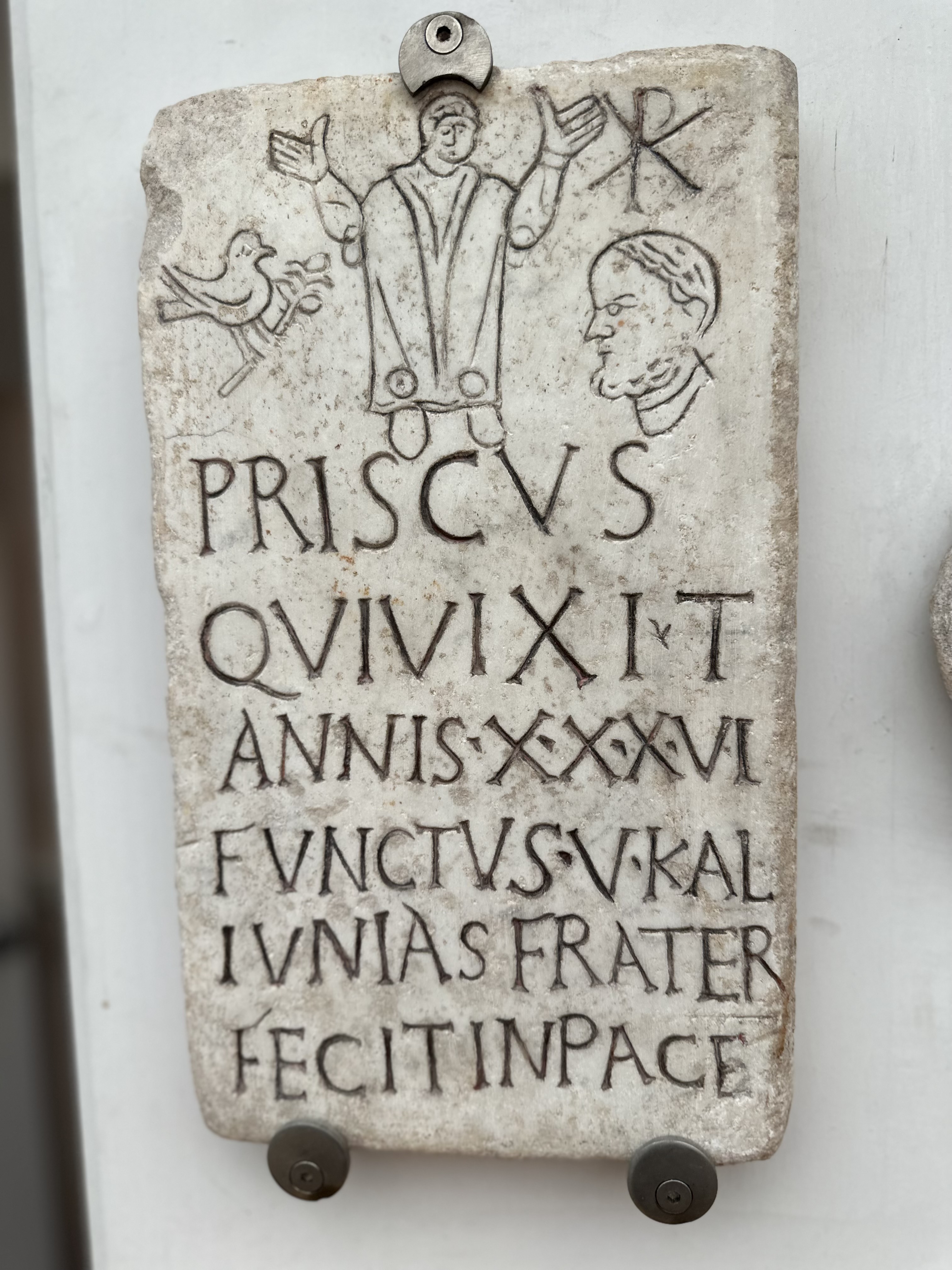
Those are likely depictions of Priscus himself, depicted in the center in prayer, and on the right in a rather grumpy mood. Let’s hope he indeed reached a state of peace in the afterlife.
Along with the Christians, there were ancient Roman Jews. This marker, in Greek, depicts a menorah, and states that the deceased, a man called Pomponius, was twice archon (head) of the Calcarenses synagogue.

This monument shows a woman with a long nose, a firm countenance, and an elaborate headdress or hairdo of some sort. The inscription tells us her name was Maria Auxesis, and she died aged 41. You would expect that this memorial was from a grieving husband or child, but none is mentioned. Instead, the inscription says it is her friend, Caius Domitius Agathopus, who built the monument. He must have been a good friend since he clearly wanted her portrayed in a very precise way.

My favorite monument here, also pictured at the top of this post, shows us a lovely young girl, who looks modest and tranquil. Based on the inscription, her name was Minucia Suaves, and she was the wife of Publius Sextilius Campanus. I imagined her as a girl growing up with fun moments such as running through a meadow, giggling; and then the anxiety of being forced into a marriage; and I hoped her manner of death wasn’t from trauma. She died at exactly 14 years, 8 months, and 23 days.
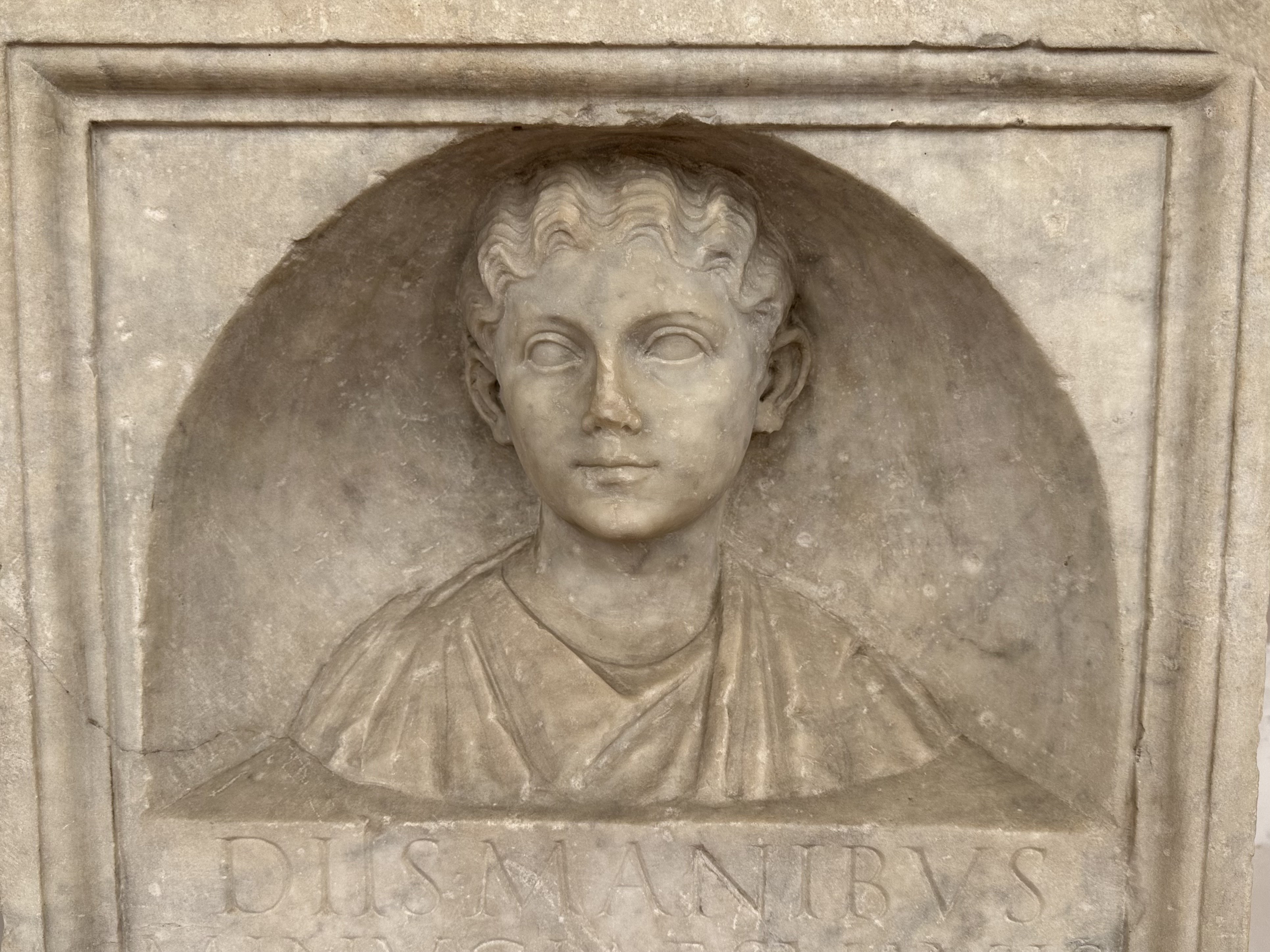
It was her father, Tiberius Claudius Suaves, who dedicated the monument. I am guessing he was the one who counted the number of days she lived with such precision. He must have loved her very much. And, judging by the gentle beauty of this touching monument, we can still see that love, two thousand years later.

 The Spanish Steps Apartment on Via della Mercede