
Rome definitely has its quirks when it comes to the names of churches. Since there are (supposedly) over 1,000 churches in Rome, sometimes you have to have something in the name to distinguish one church from another. As an example, there are Saint Paul’s Outside the Walls (San Paolo fuori le Mura) and Saint Paul’s Within the Walls (San Paolo dentro le Mura). The walls mentioned are the ancient Aurelian Walls that still surround the historic center.
The former church is one of the four papal basilicas. The latter was the first Protestant church in Rome, whose congregation comprises many Americans. Indeed, it was the church I grew up with, and where we had our marriage blessed many years ago.
Saint Paul Within the Walls is a new church by Roman standards. It was built in 1880 and designed by English architect George Edmund Street in the Gothic Revival style. The first thing you’ll notice is the striking facade, with alternating “stripes” of red brick and pale stone.

The church’s main doors – rarely open – are sculptures made of bronze by American Dimitri Hadzi.


The usual entrance is on the side, tucked into a pretty little garden filled with modern sculpture.

The interior is exquisite.

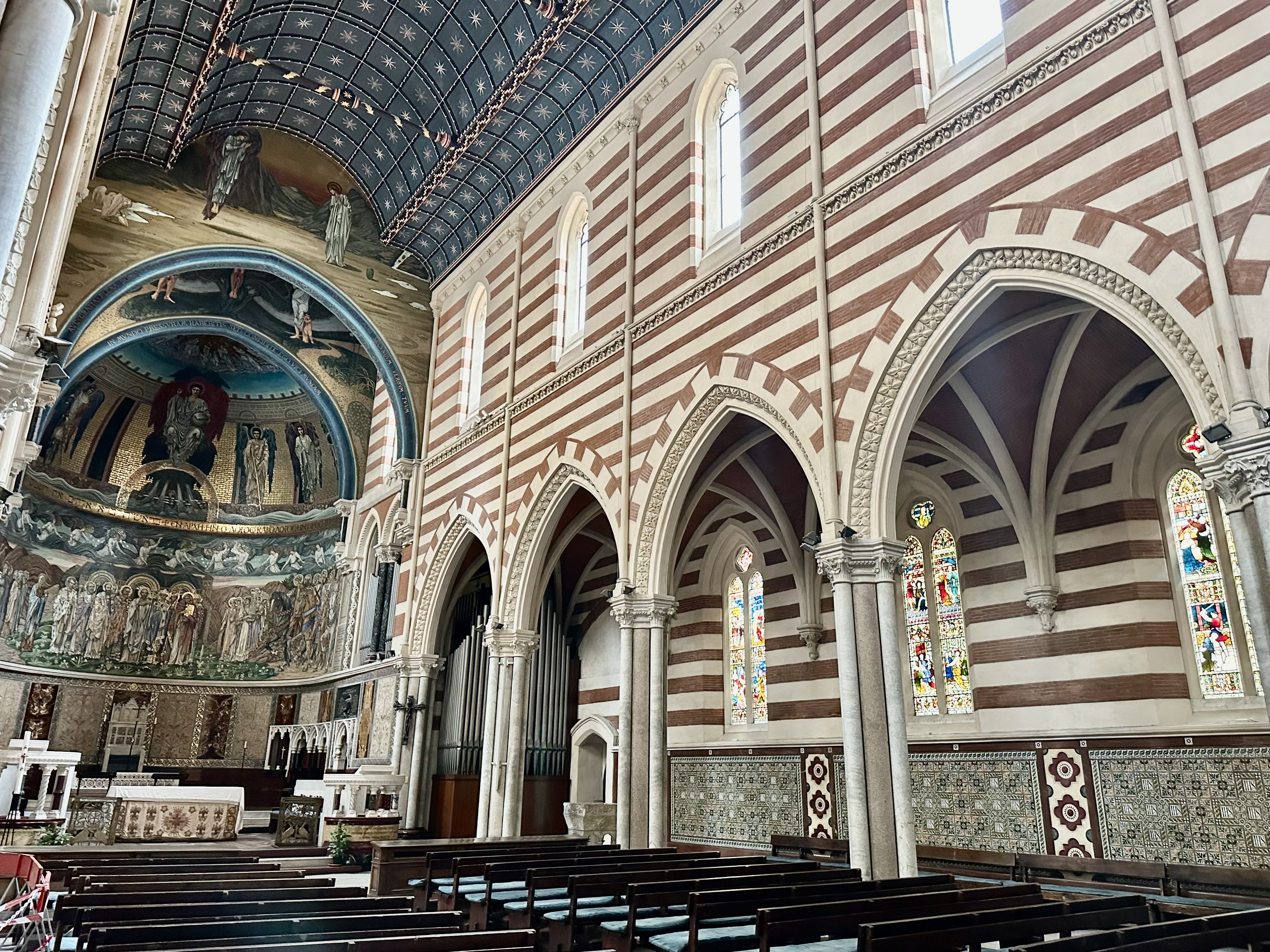
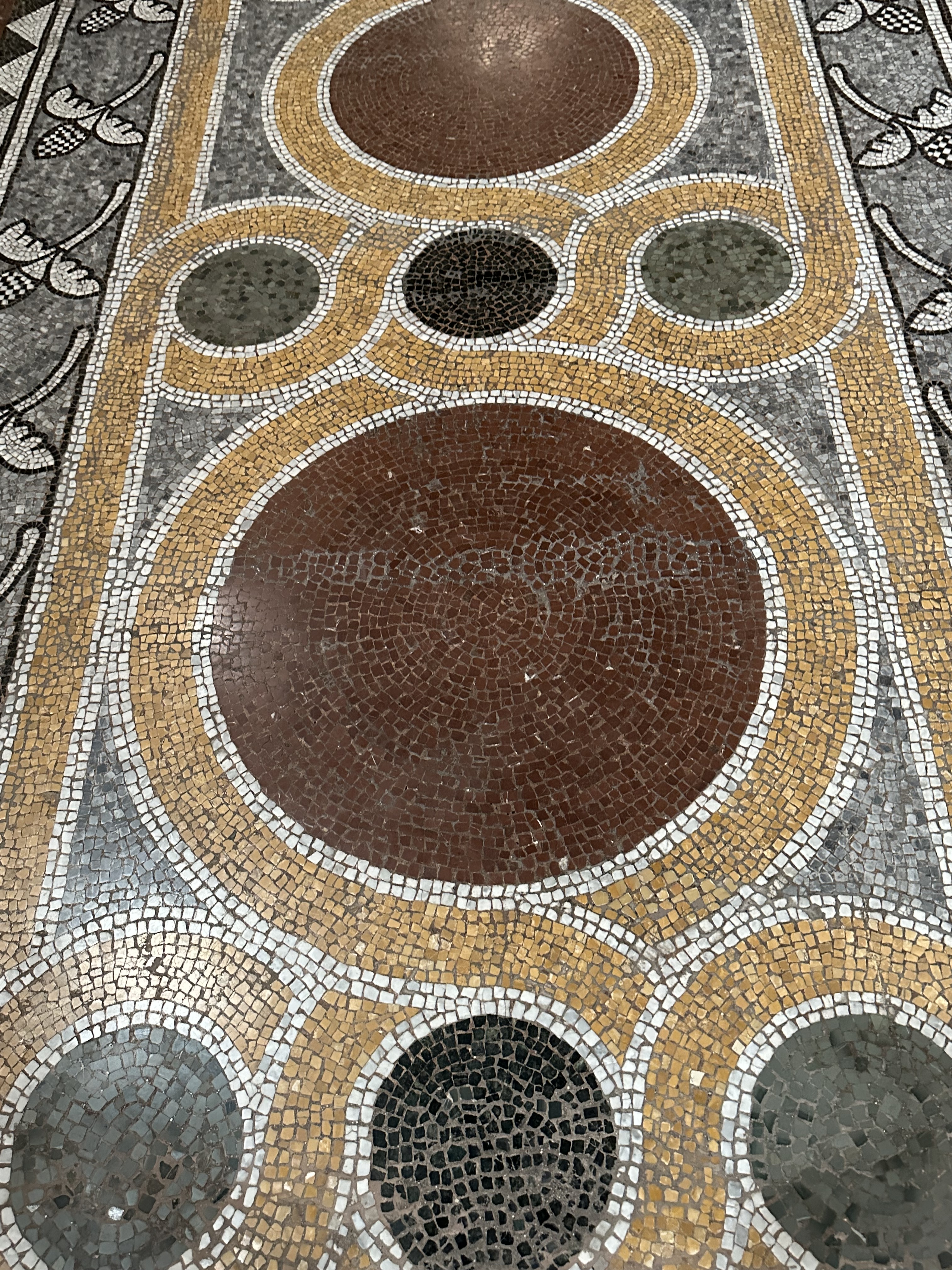
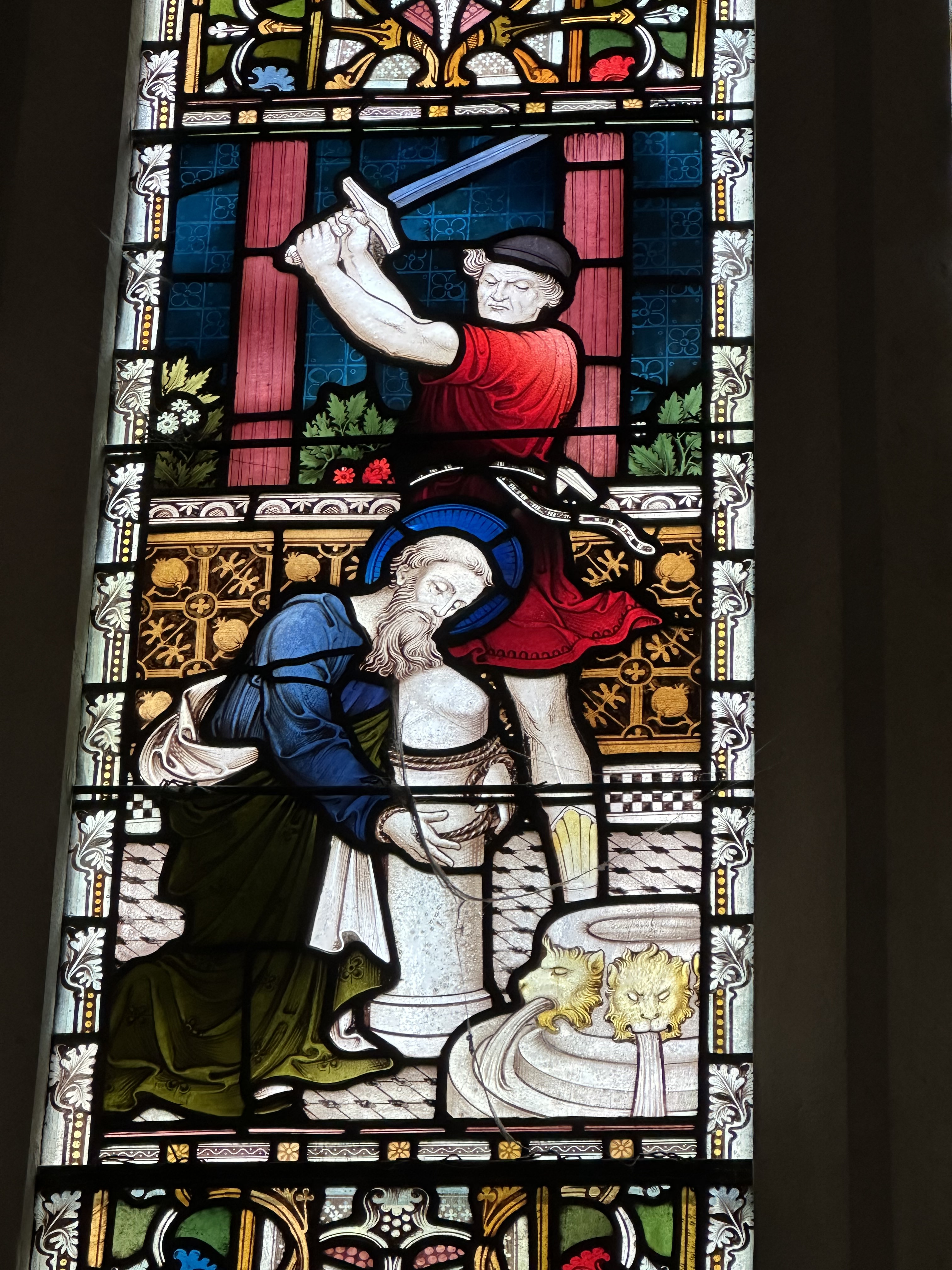
The floors are, to my eye, a modern interpretation of Rome’s marvelous Cosmatesque floors. The stained glass is also beautiful.


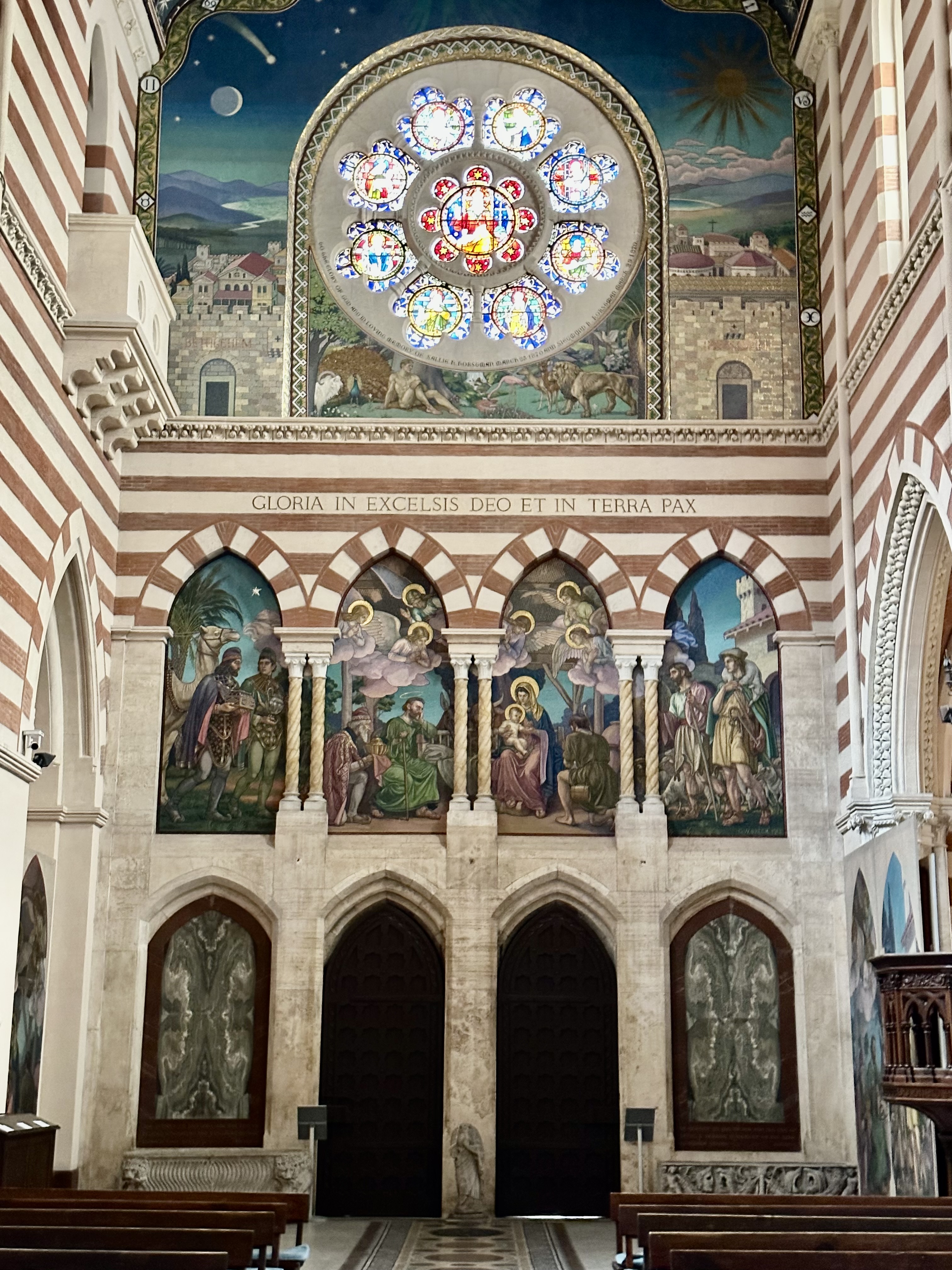
The back wall contains mosaics by the American artist George Breck.
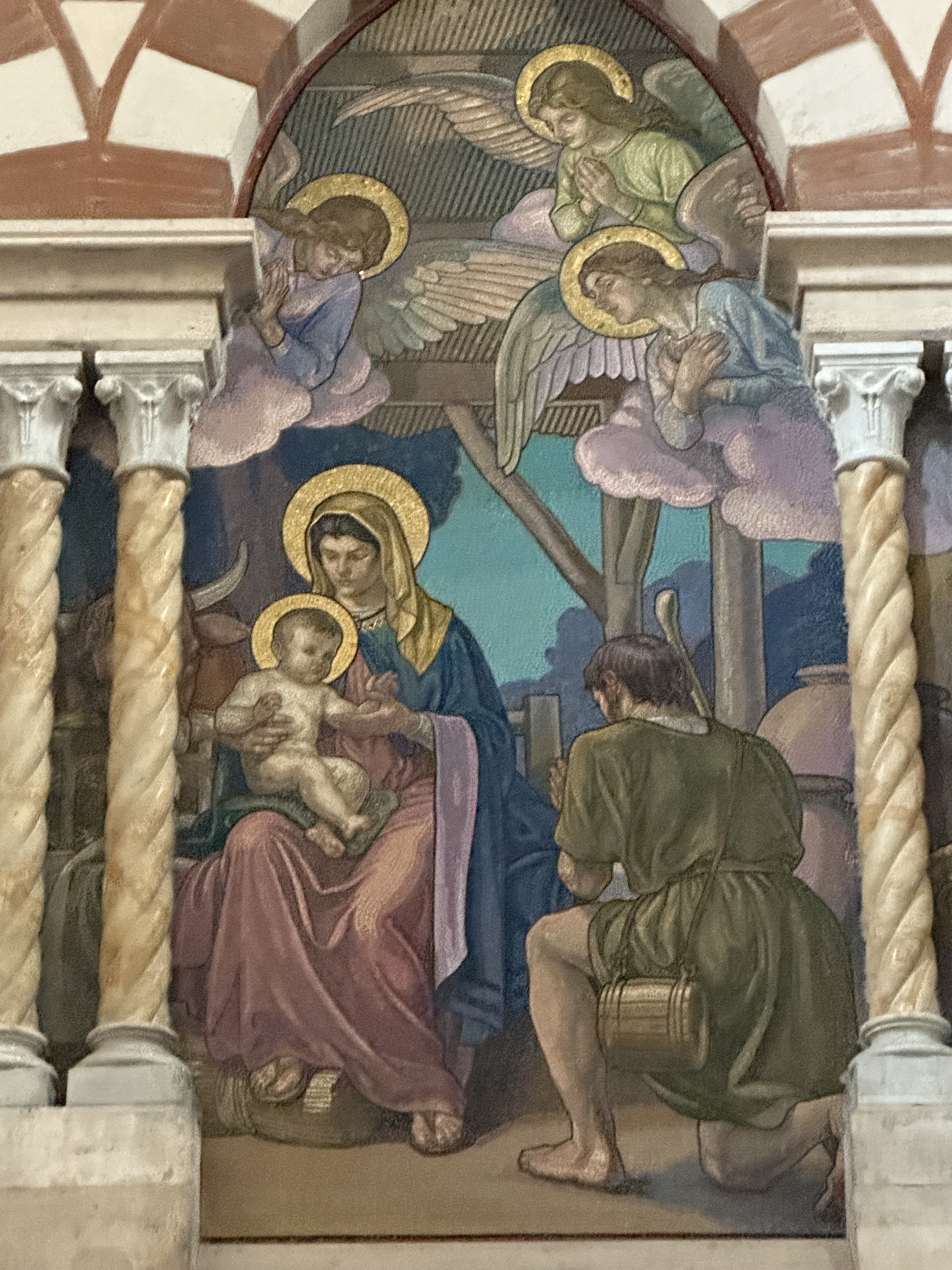

The mosaics on the other end — the apse — are the tour de force of this amazing church. These are the mosaics by the Pre-Raphaelite artist Sir Edmund Burne-Jones.

As shown at the top of this post, the great mosaic in the apse represents Christ in glory, enthroned and holding the orb of the earth, with one hand raised in blessing.

The next level of mosaics depicts the “Earthly Paradise,” under a ribbon of angels which separate the aerthly world from the heavens above.

This part of the central mosaic depicts the Fathers of the Church.
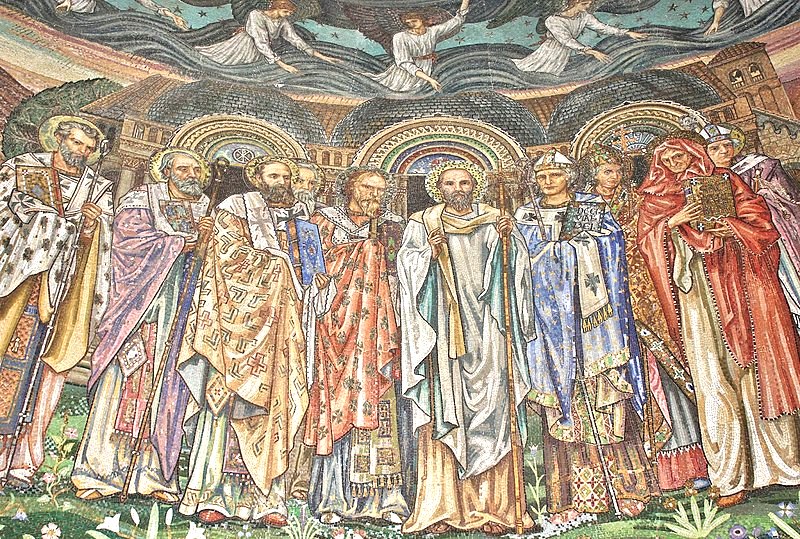
Some of the wonderful and unusual little touches about this church are epitomized here. This part of the central mosaic is called the “Church Militant” (or Christian Warriors) and depicts various saints known for their battles.

Look closely. The artist has used the faces of some real-life modern heroes in his depiction of these saints. For example, the second soldier (Saint James of Spain) has the face of the Italian hero Giuseppe Garibaldi; the figure in green, Saint Andrew, is Abraham Lincoln. There is a helpful guide about these mosaics on the church’s website.
St. Paul’s Within the Walls is very much worth a visit. It stands not far from Termini, Rome’s main train station, so it is very easy to get to. Often Rome’s “modern” history, and more modern artwork, is overlooked due to all of Rome’s classical and Baroque treasures. But this church is one you should make the time to see. In addition, if you’re visiting Rome and wish to see a concert, Saint Paul’s Within the Walls frequently has concerts. Some, run by the church, are free or very inexpensive; others — by a professional opera company — are reasonably priced.

 The Spanish Steps Apartment on Via della Mercede