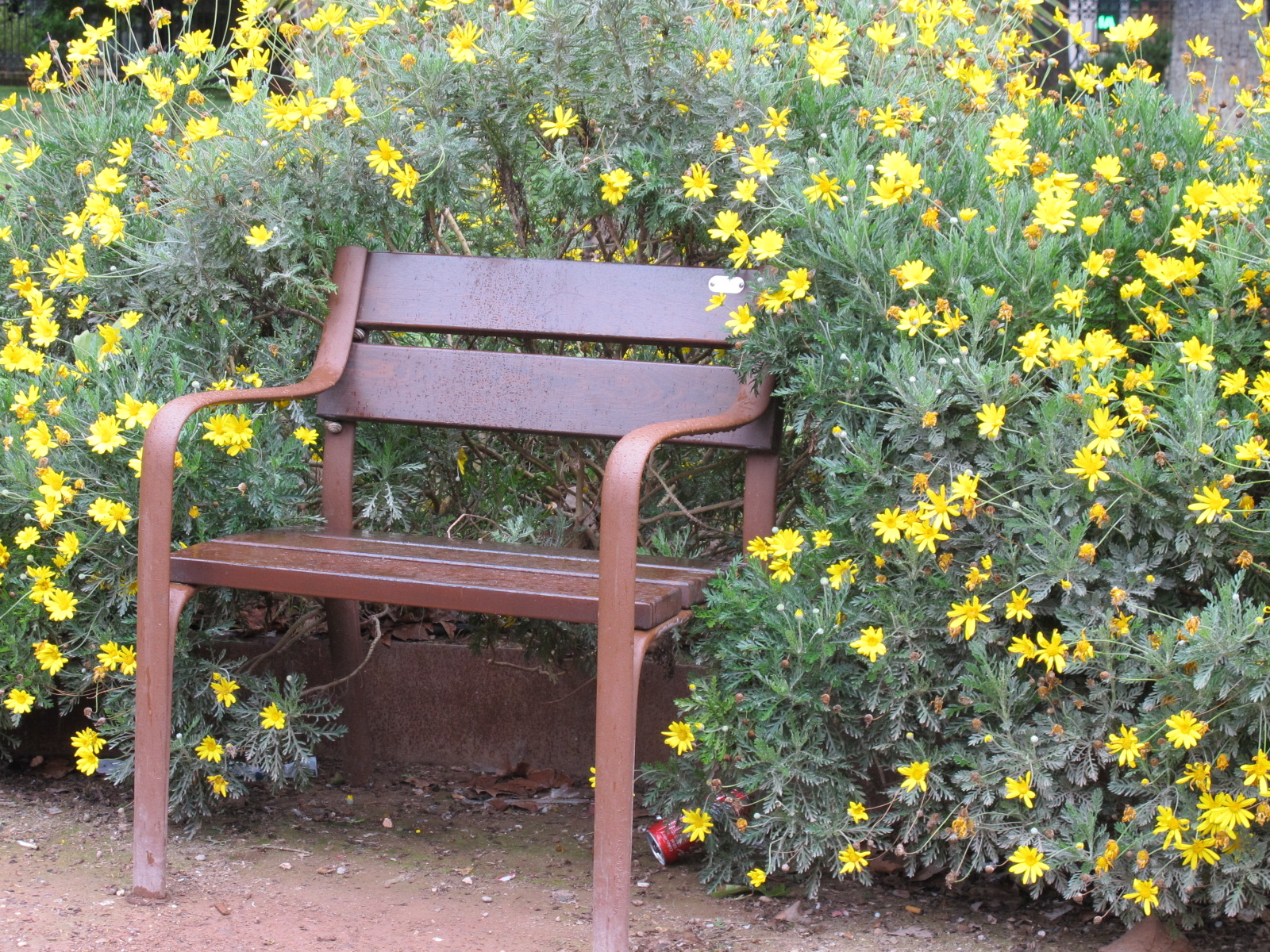
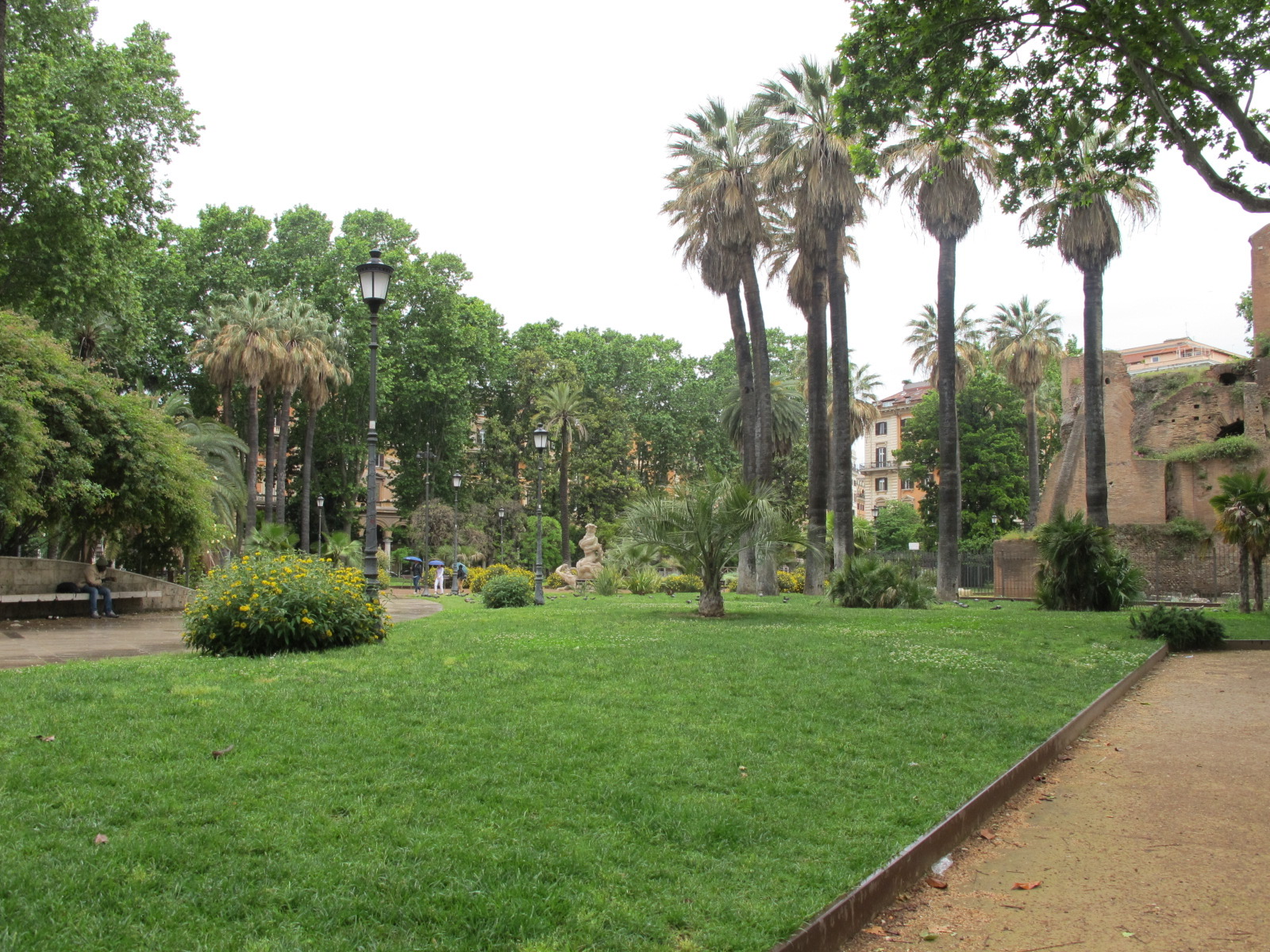
What a difference a few years can make. I had not been to Piazza Vittorio Emanuele II, commonly referred to as Piazza Vittorio, for several years, as my last visit was definitely P.C. (Pre-Covid). But I recently rediscovered the park (technically, the Giardini Nicola Calipari) in this piazza after a visit to Rome’s newest museum, which is about the ancient gardens that were once in this very spot.
The park was quite run down and a bit seedy on my previous visit. Back in P.C., many of Rome’s parks were getting quite run down. I don’t know how recently or why the piazza was spruced up since something like this would have taken lots of time for planning and execution. But now, I am impressed and delighted with this pleasant little park.
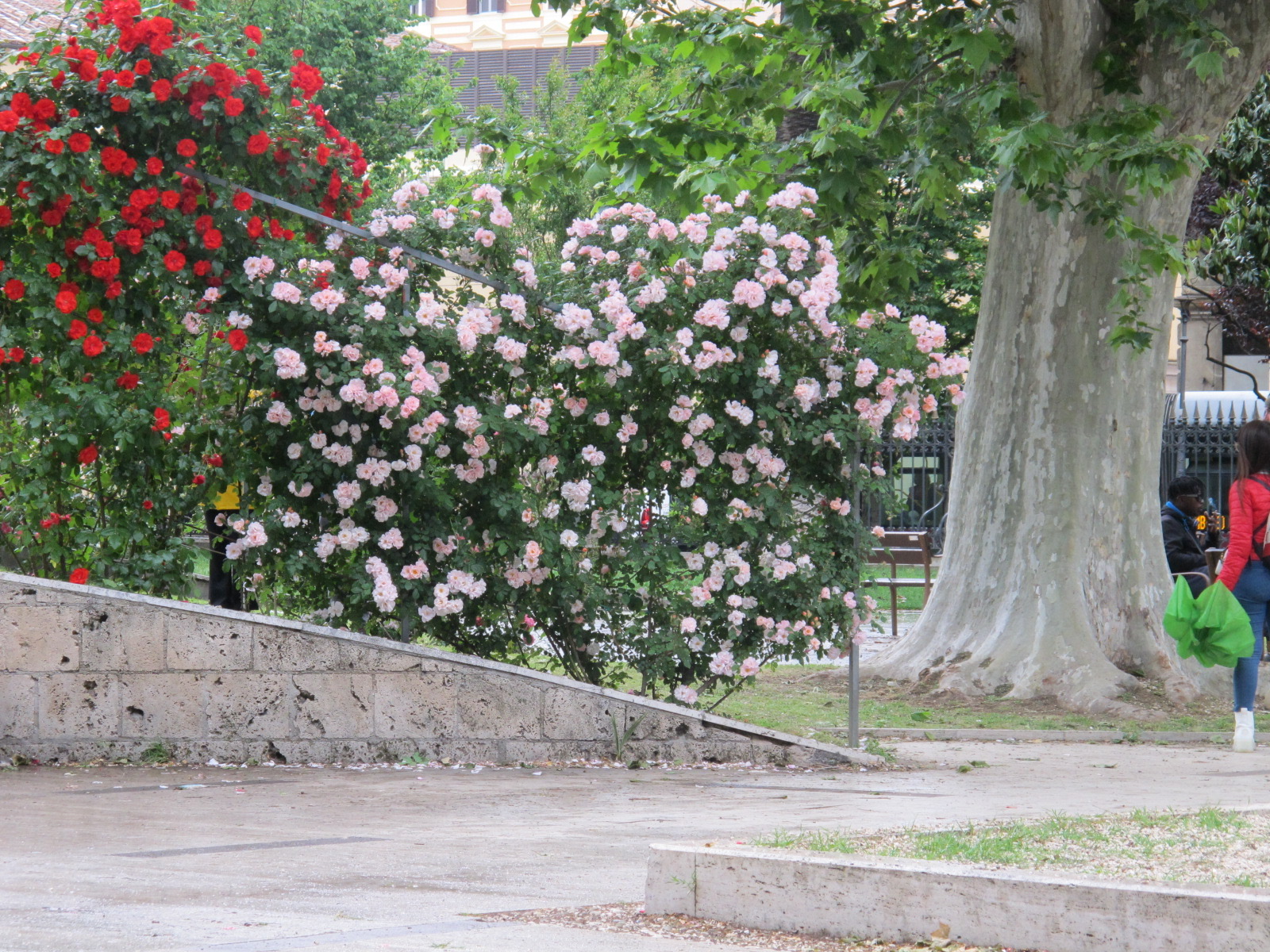
It was a beautiful day on this recent visit, though the skies were periodically threatening a light rain. Everything was green and lush, and the roses were in full bloom.
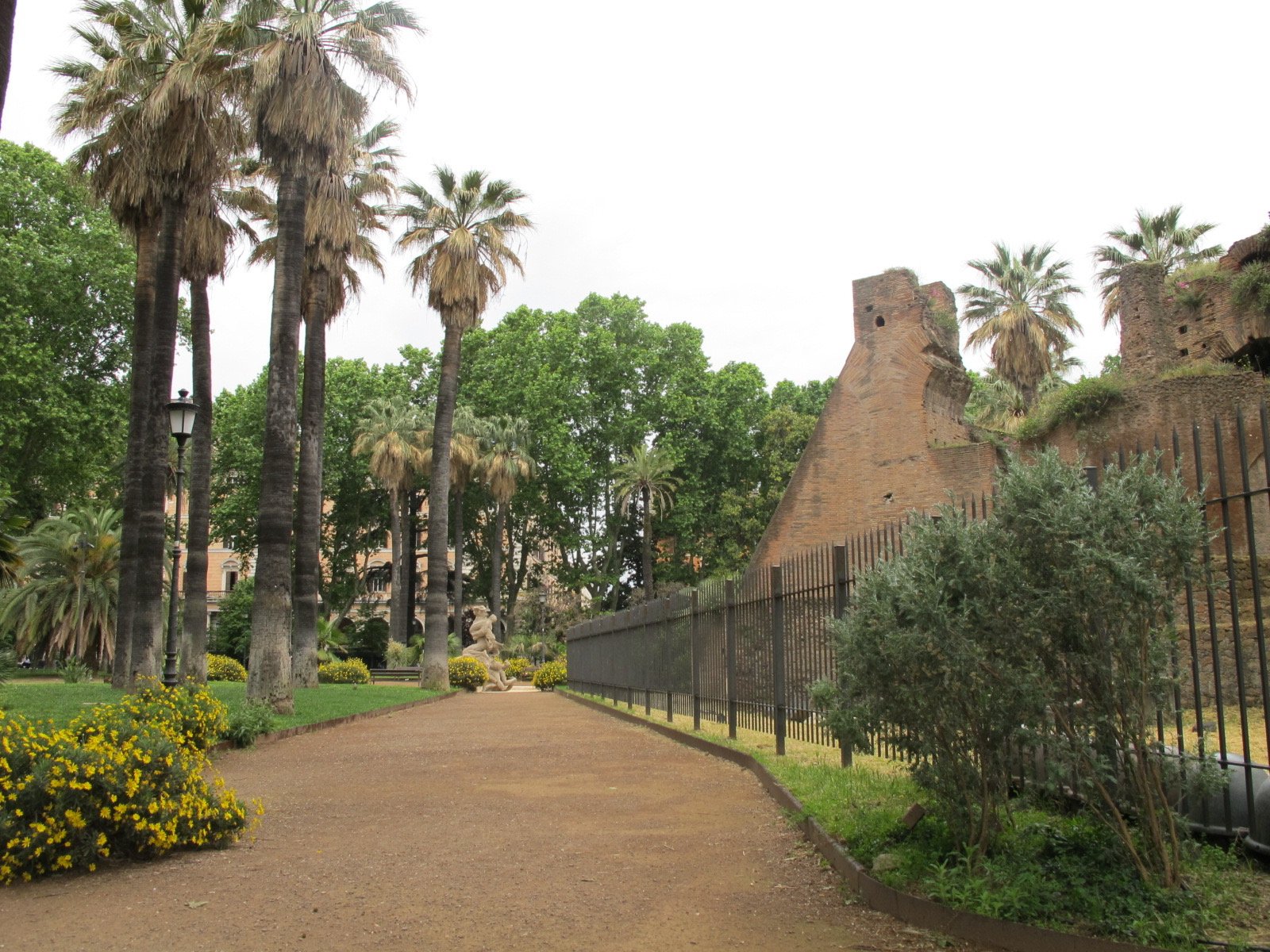
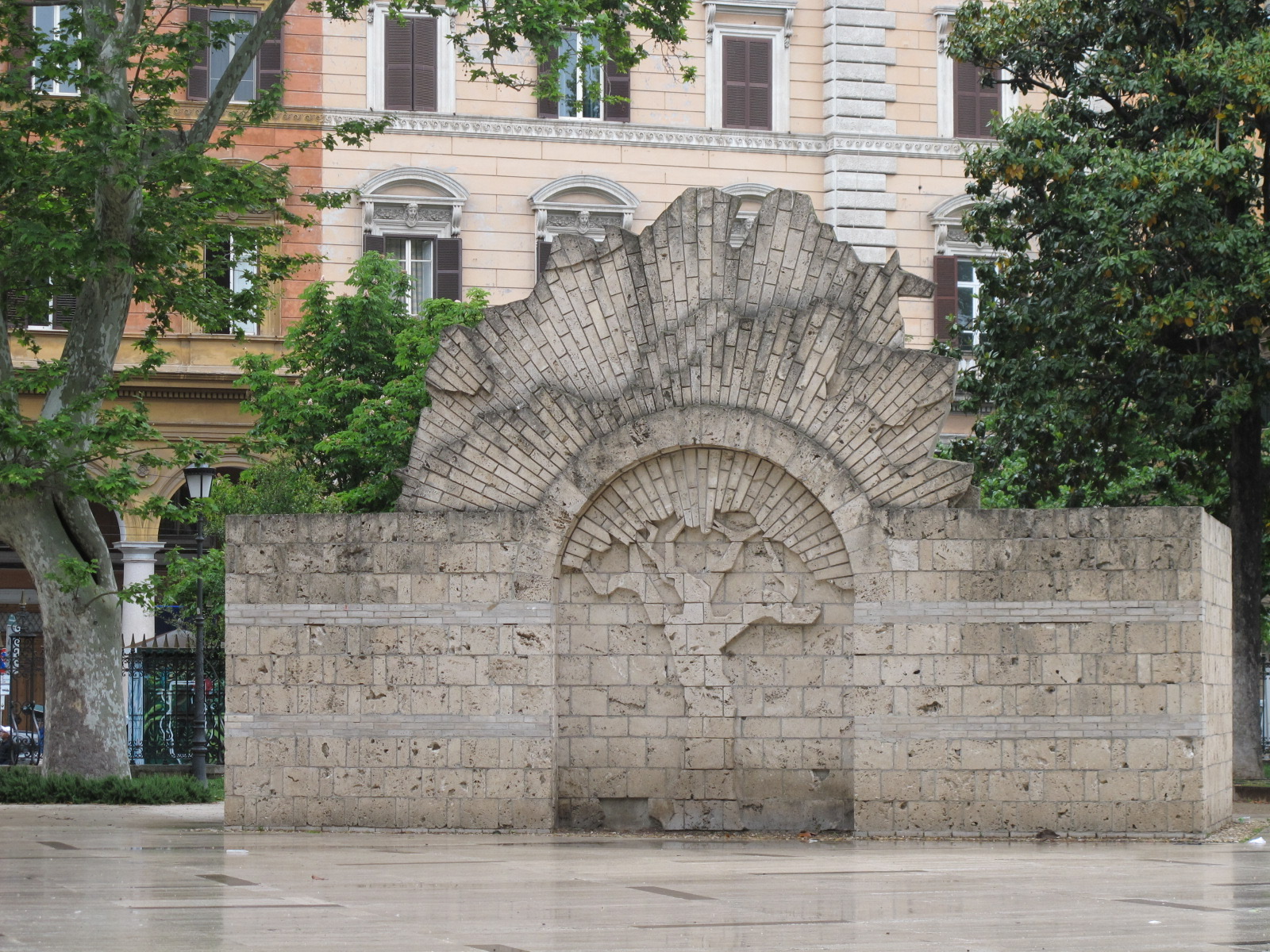
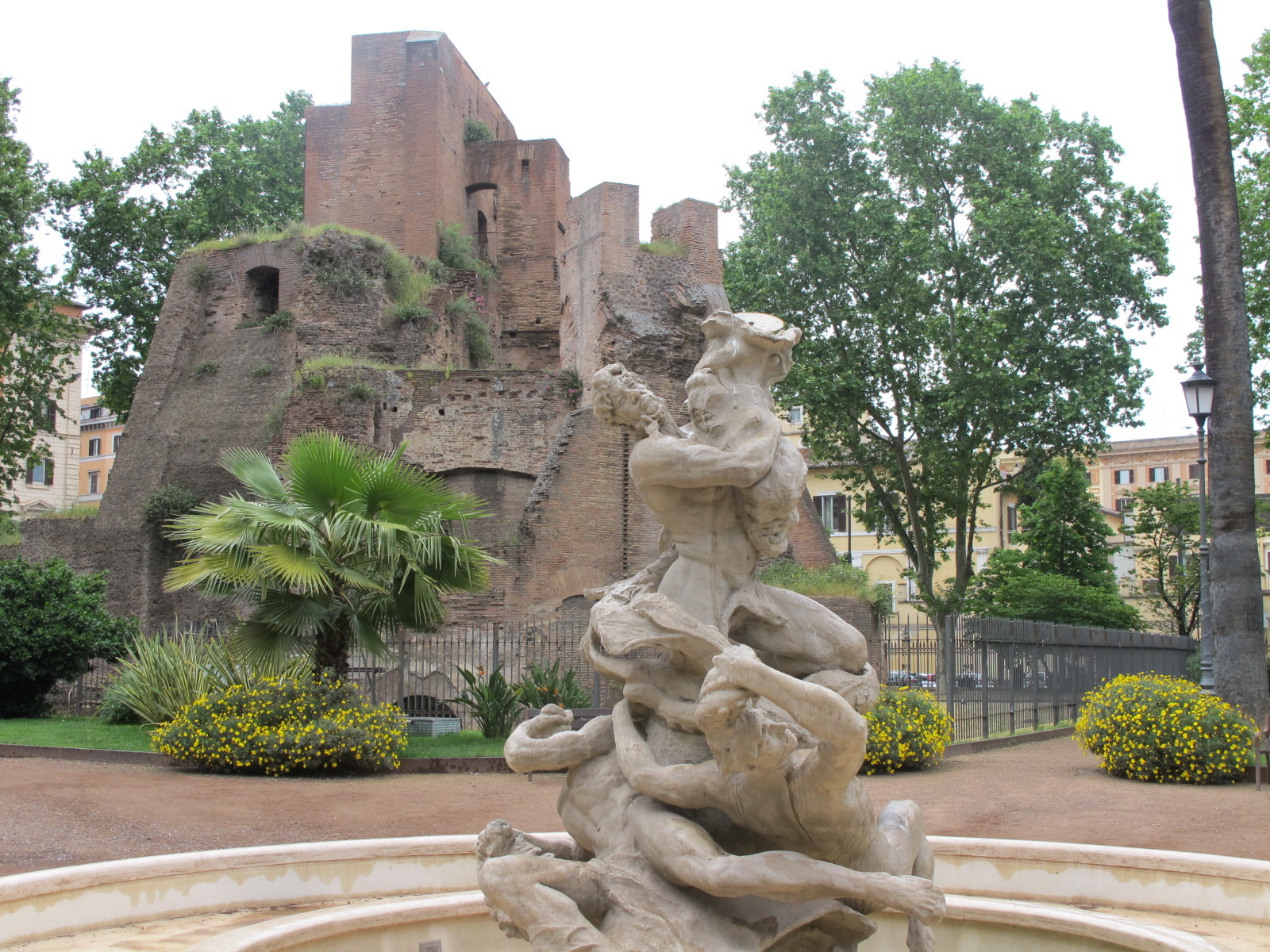
The park — the gardens — contains several features of interest. The so-called “Trophies of Marius,” are the remains of an ancient nymphaeum — basically, a really big water fountain — built by Emperor Severus Alexander in 226 C.E.
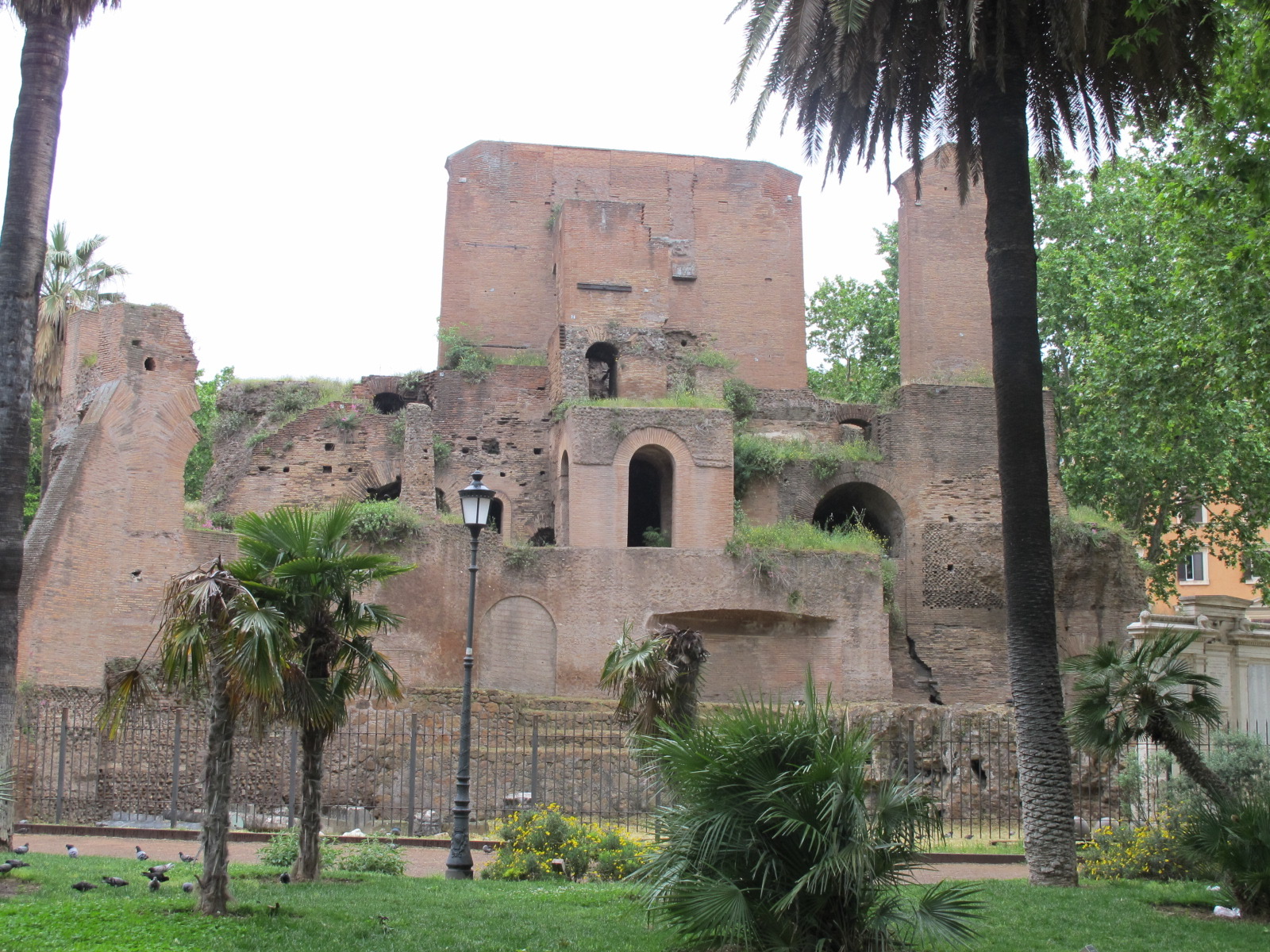
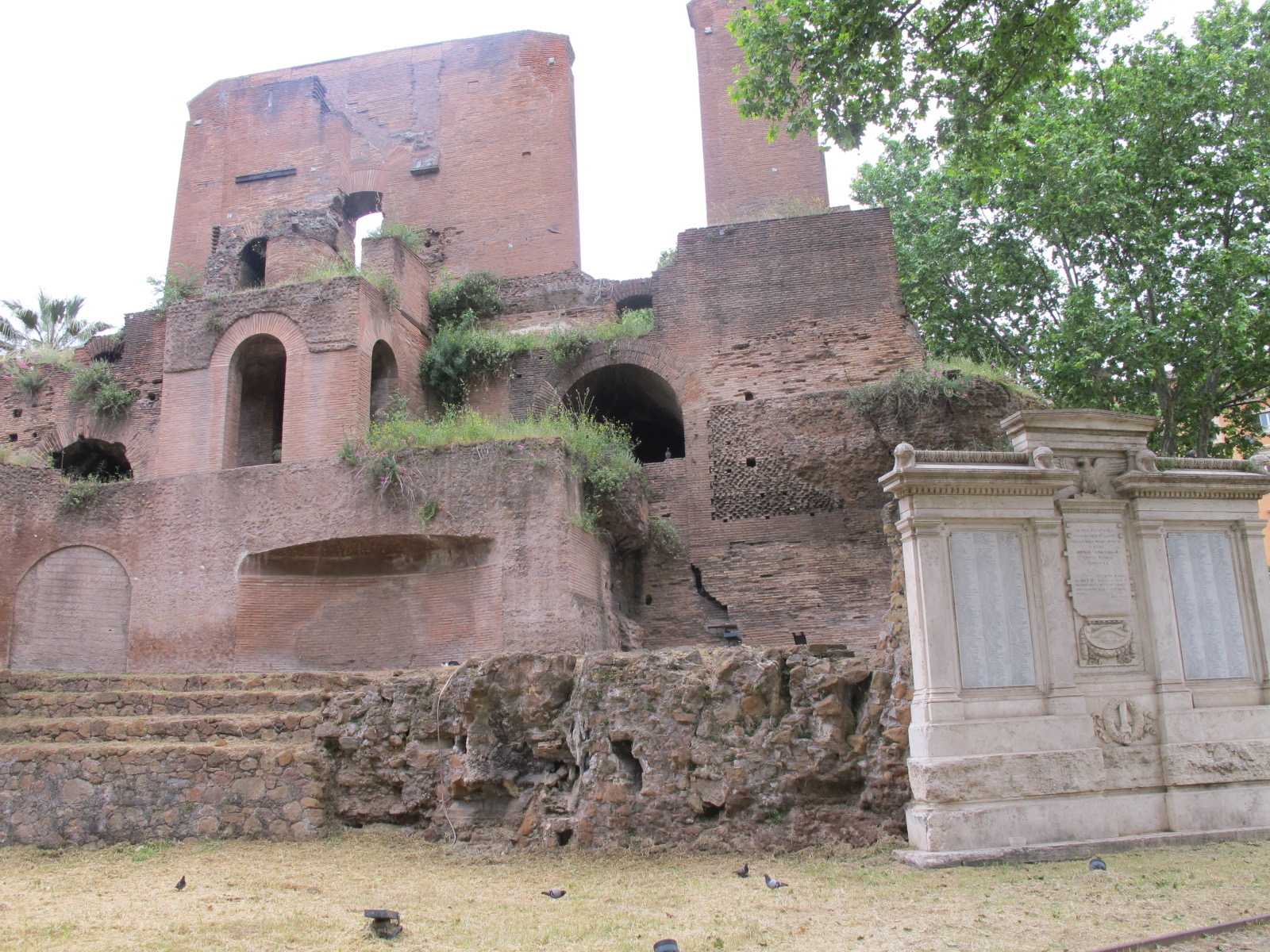
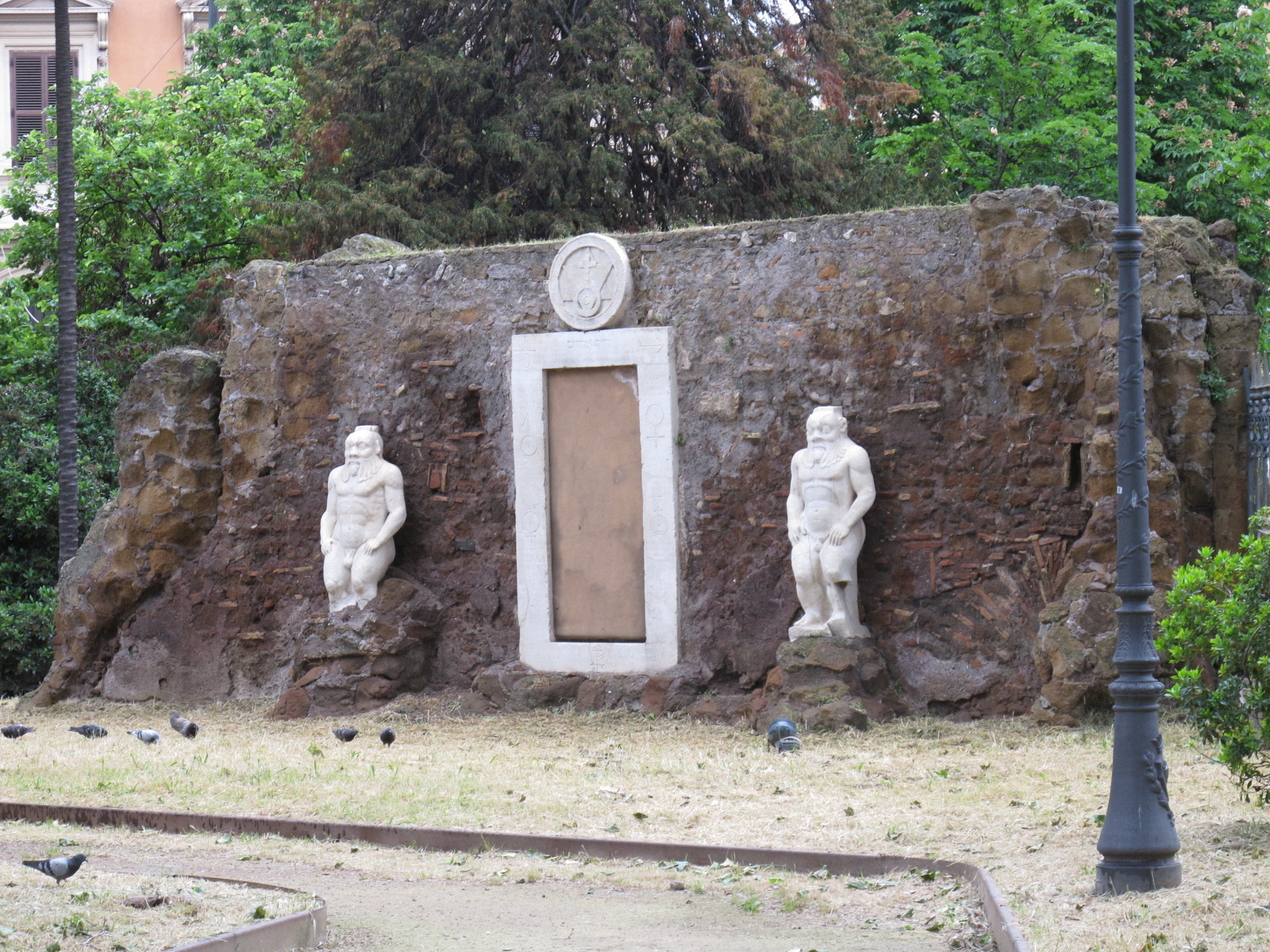
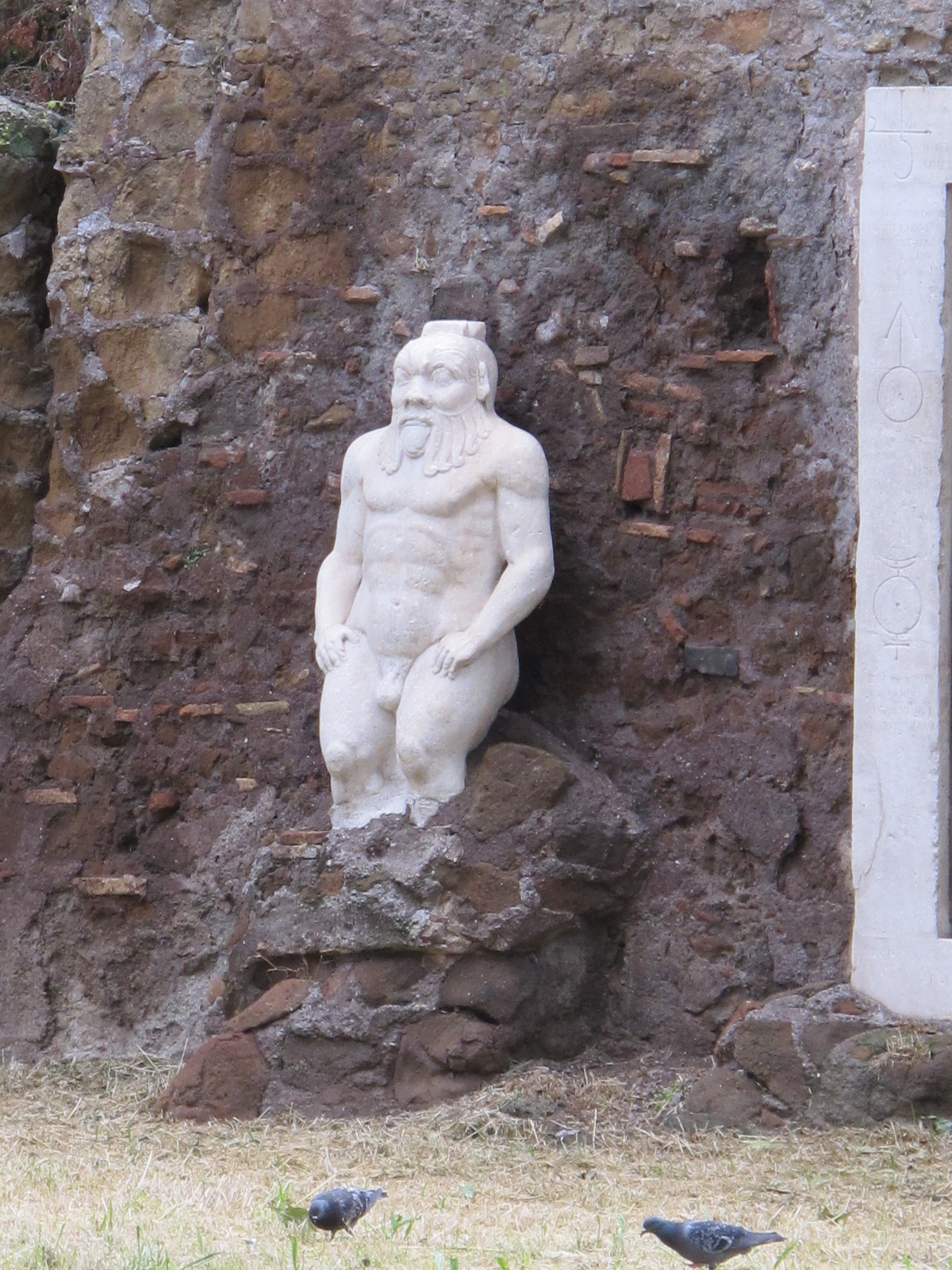
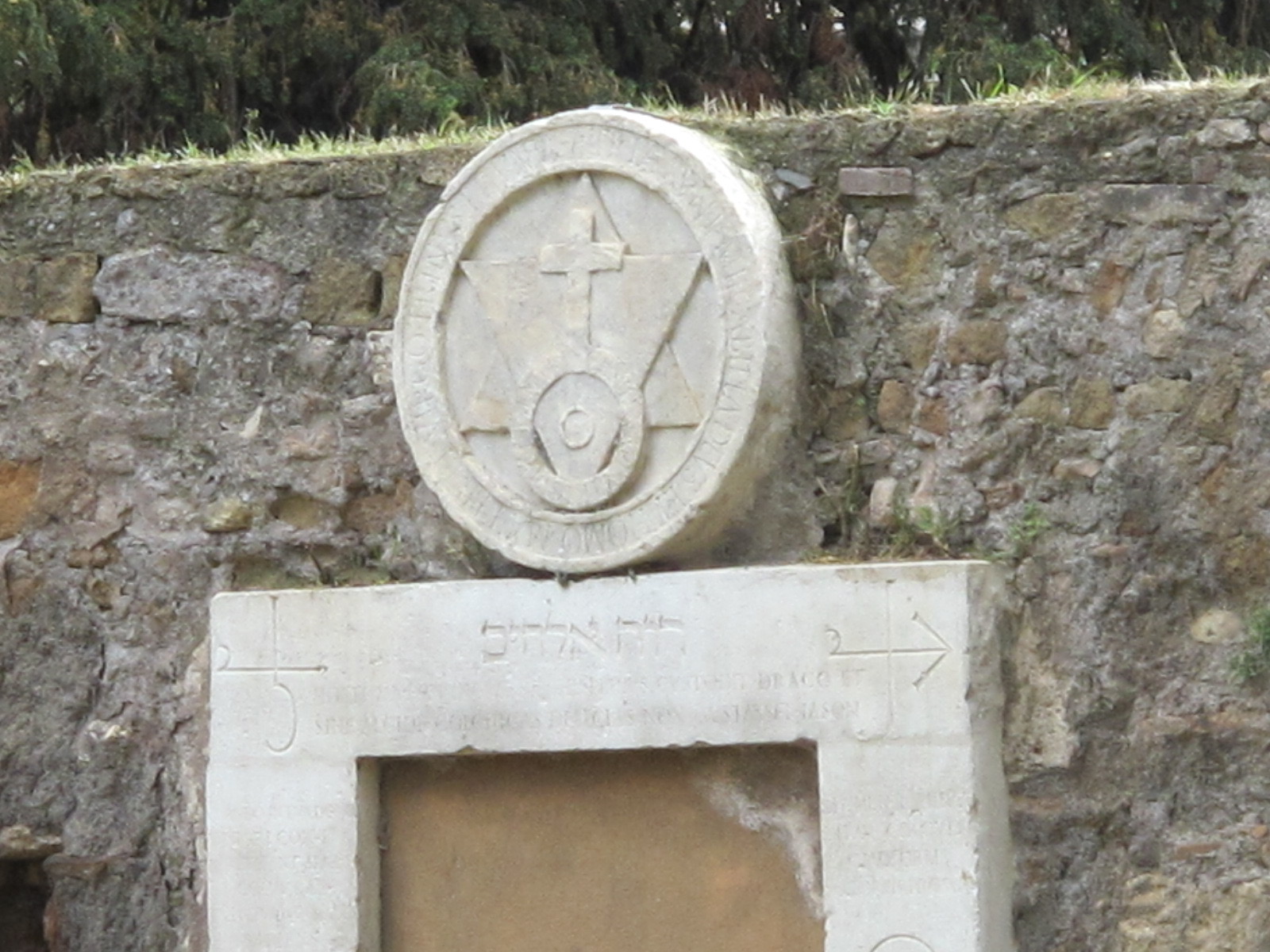
The second feature is much stranger. The “Magic Door” (a.k.a., the “Porta Alchemica”) is a marble doorway set into a wall, and the doorway is guarded by two statues of the little Egyptian god Bes. It’s all that remains of a villa built by Massimiliano Palombara, the Marchese of Pietraforte. Legend says the marchese hosted an alchemist who conducted experiments at the villa. He attempted to turn base metals into gold while there. But the alchemist vanished, leaving behind some gold flakes and a parchment of esoteric symbols and words. The marchese had them carved into the doorway in the hope that someone, someday, could decipher them.
Elsewhere in the park, there are some nice things to see, including a fun, brightly-colored mosaic.
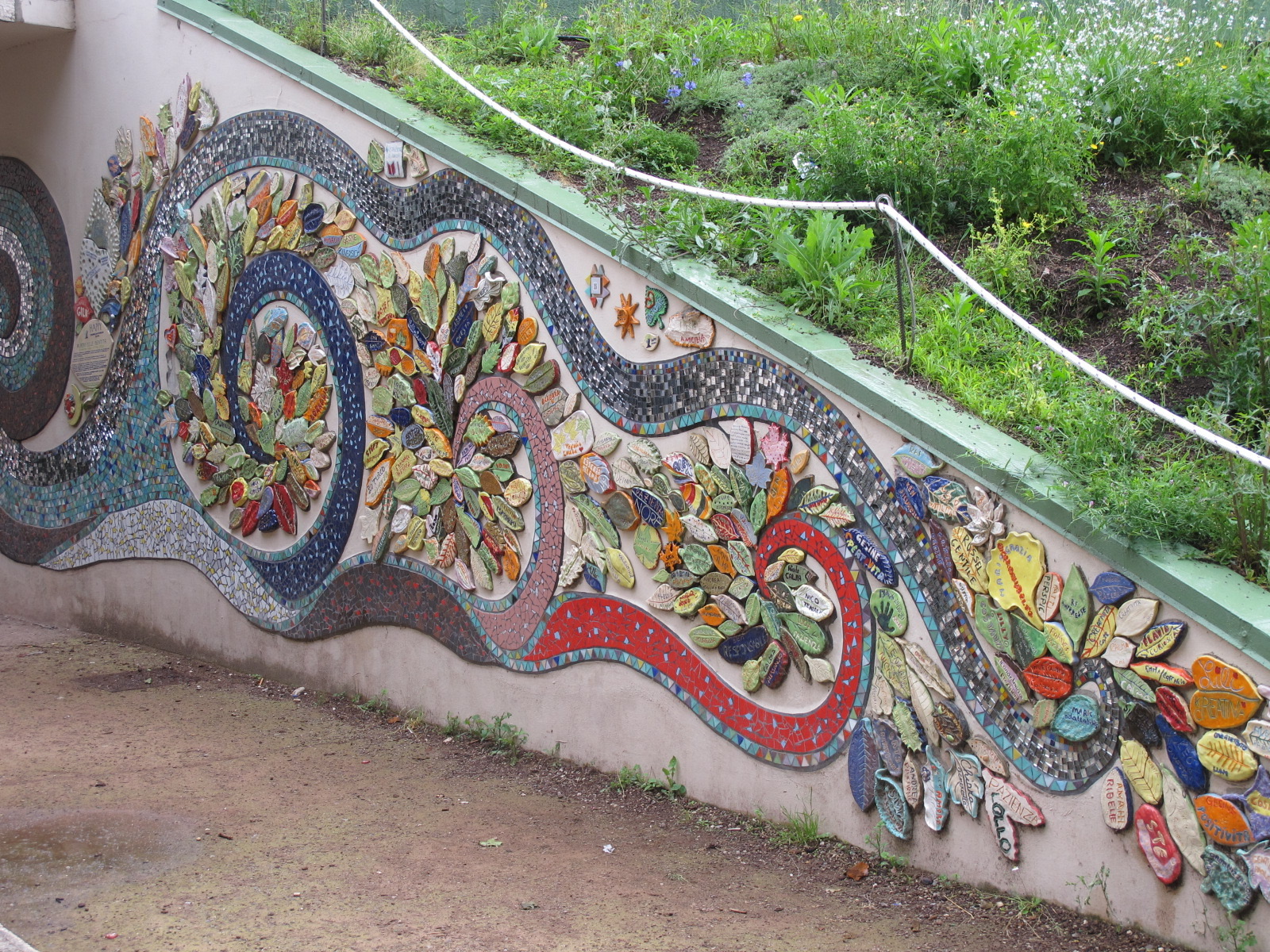
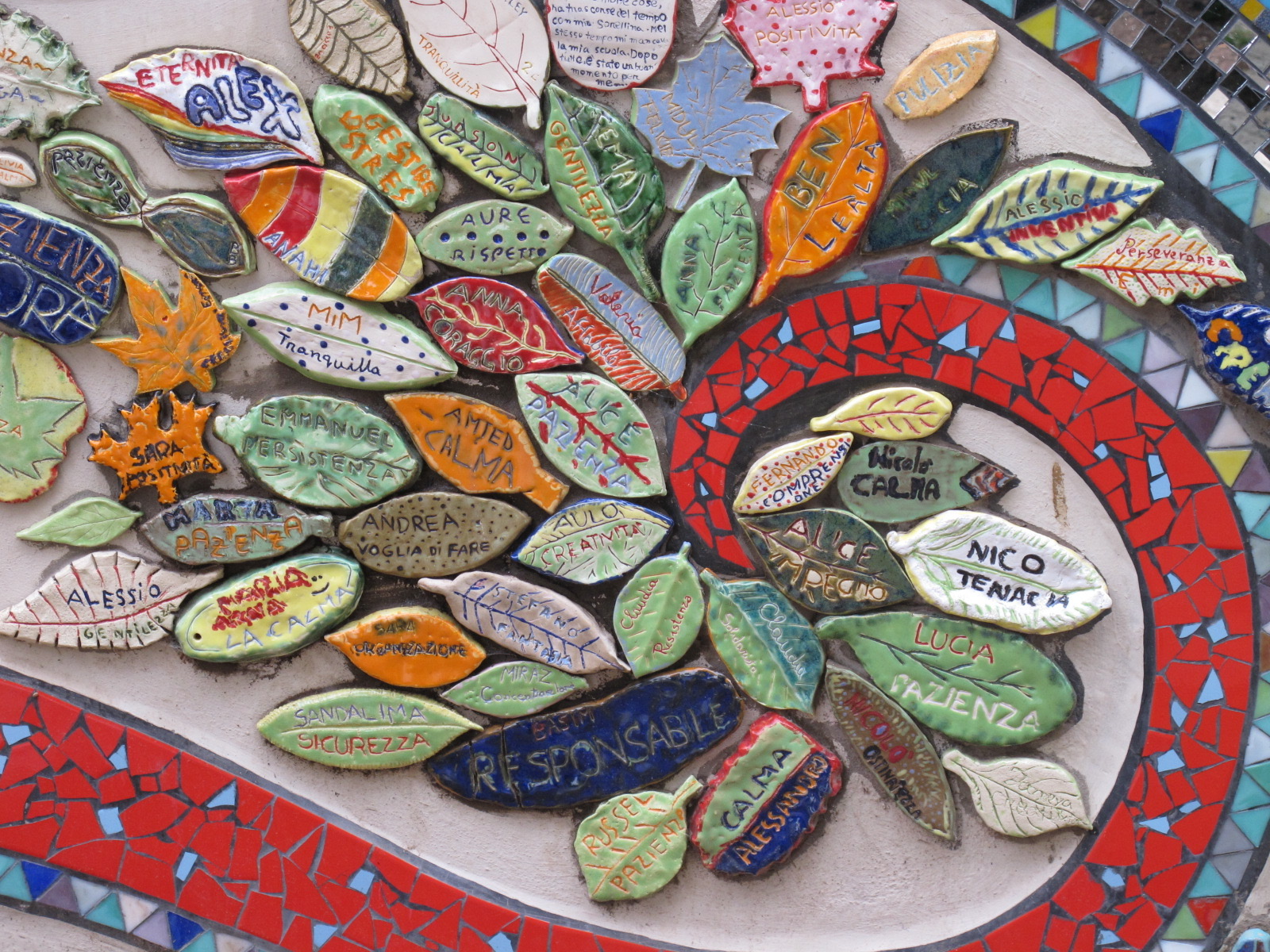
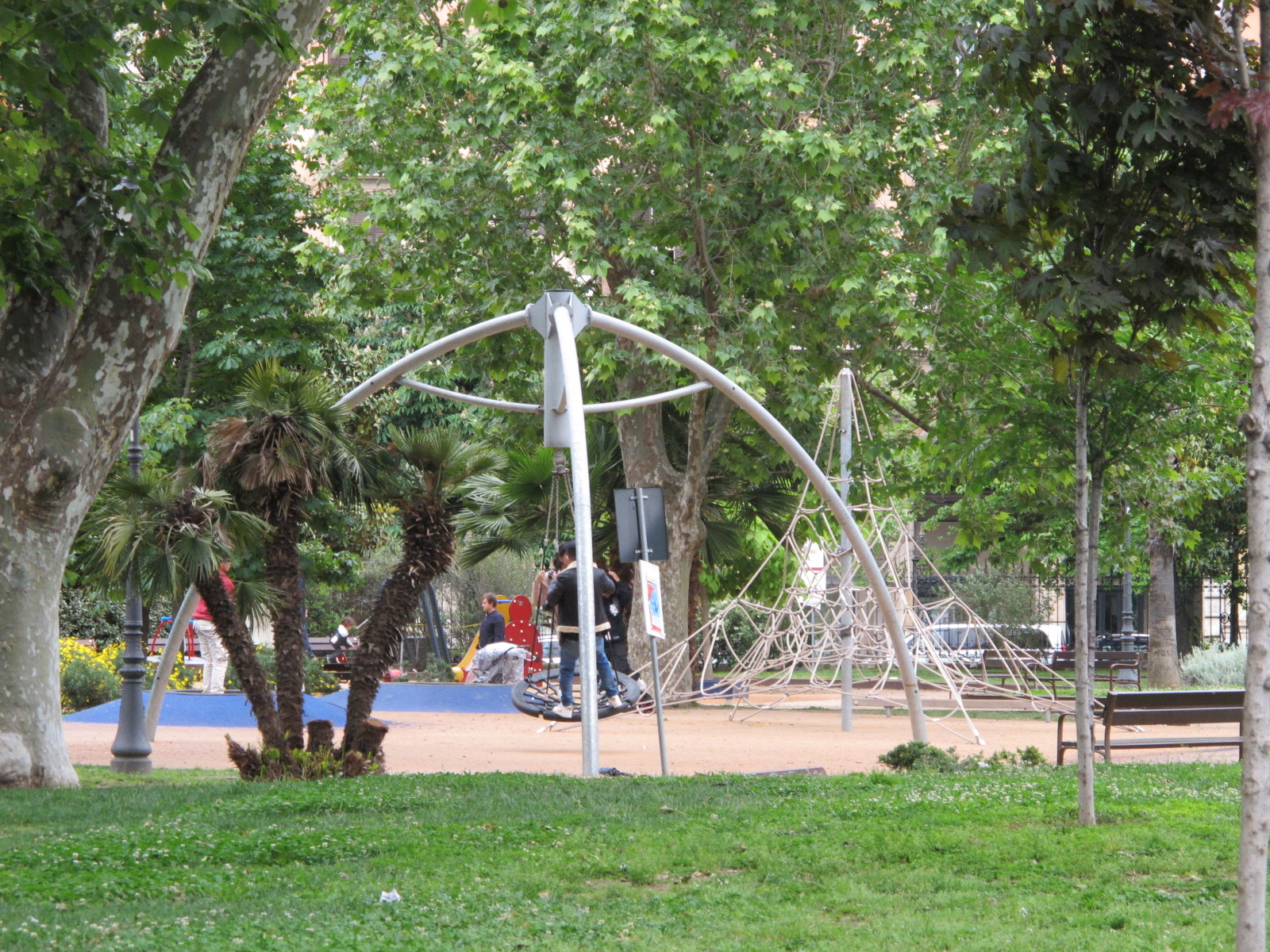
There’s a playground area for children, and in one corner of the park there is a little bar.
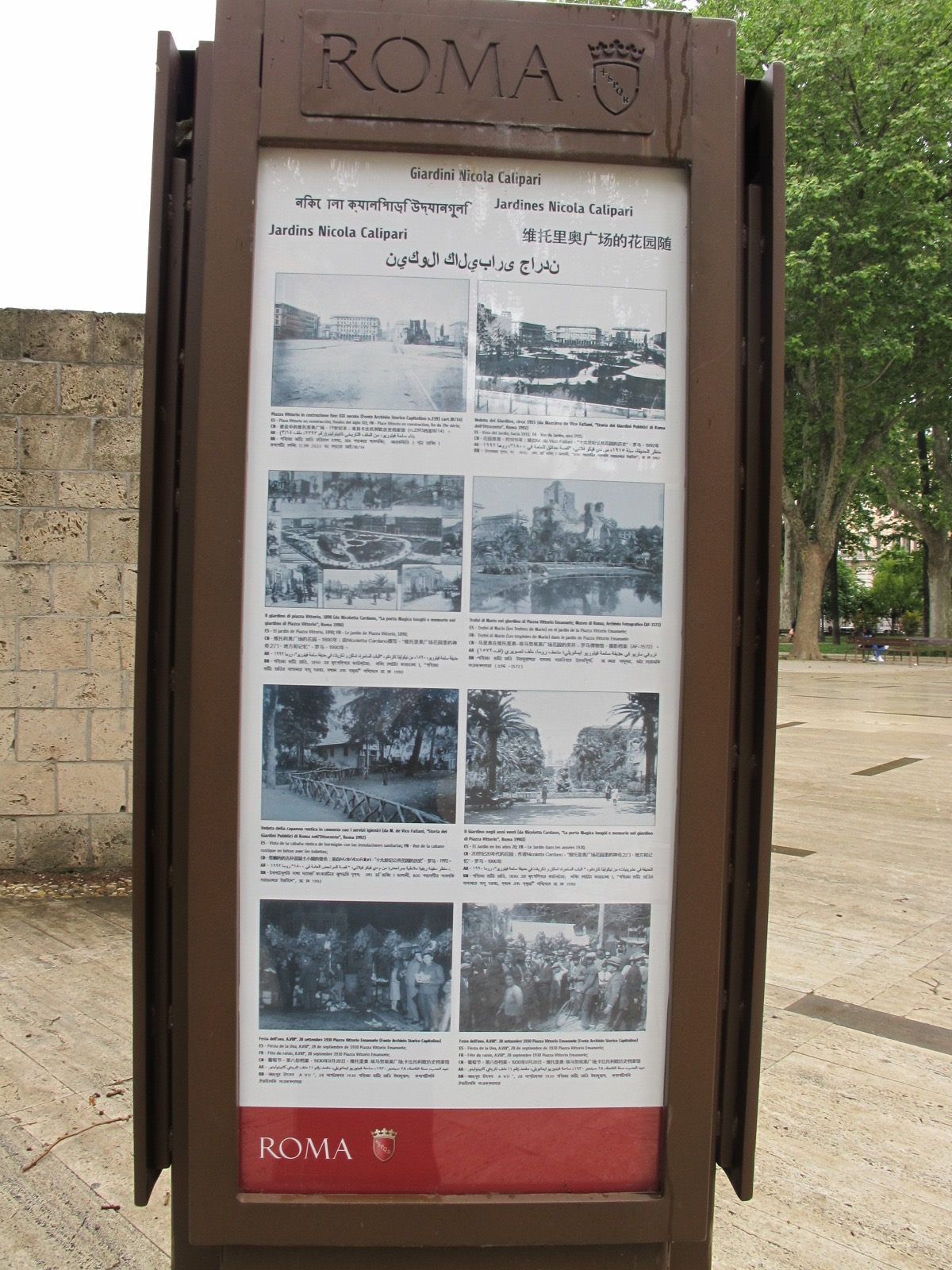
One thing I noticed is an interpretive plaque that discusses the history of the park in multiple languages. A very nice touch.
I also noticed that a number of little huts have been installed for the park’s resident semi-feral cats — another nice touch.
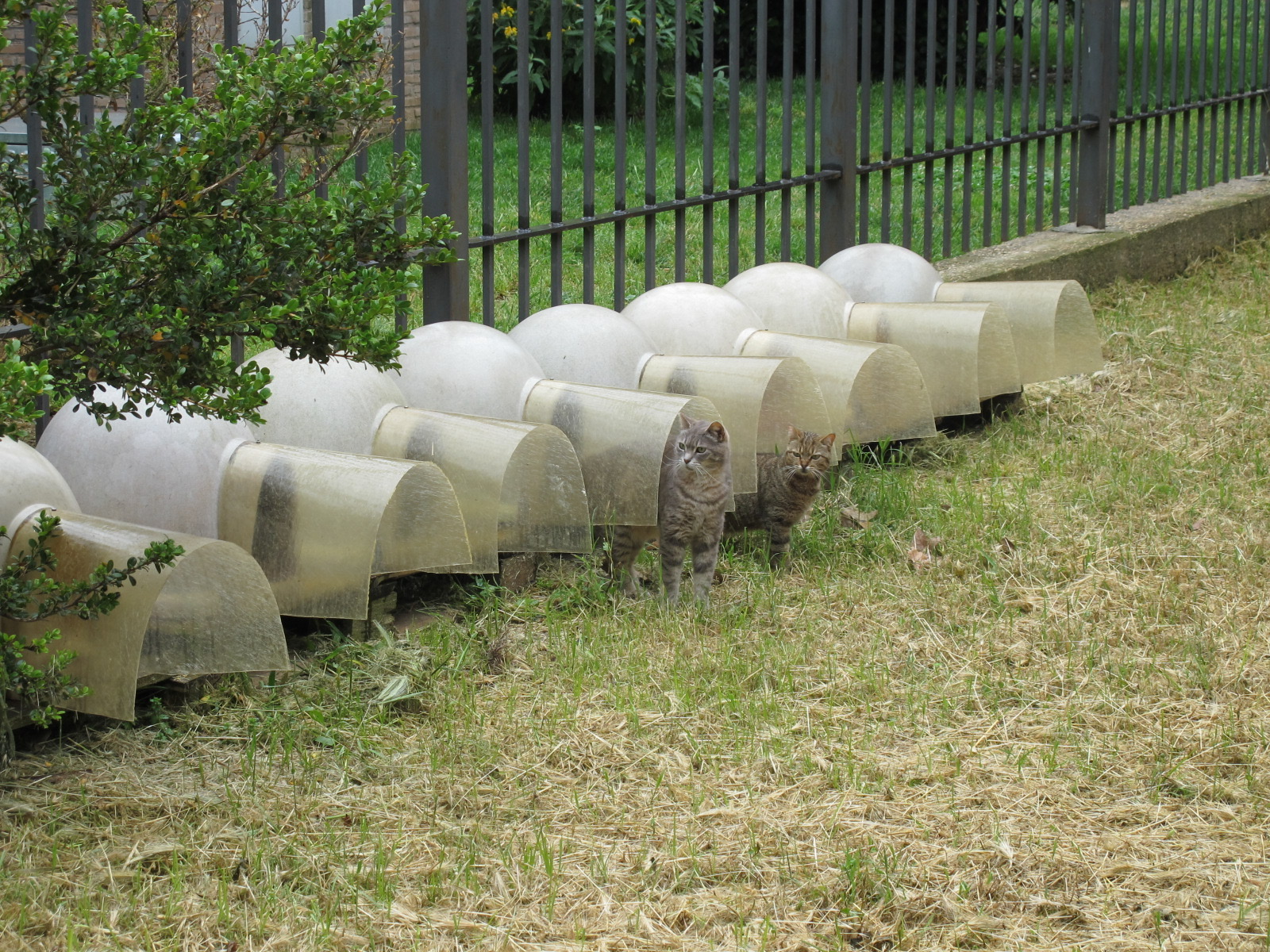
What a wonderful surprise to find this little park, once so neglected, is now cared for and enjoyed by many.
When the skies followed through on their threat to rain, it was time to go. I opened my umbrella, headed to the nearby metro, and returned home.
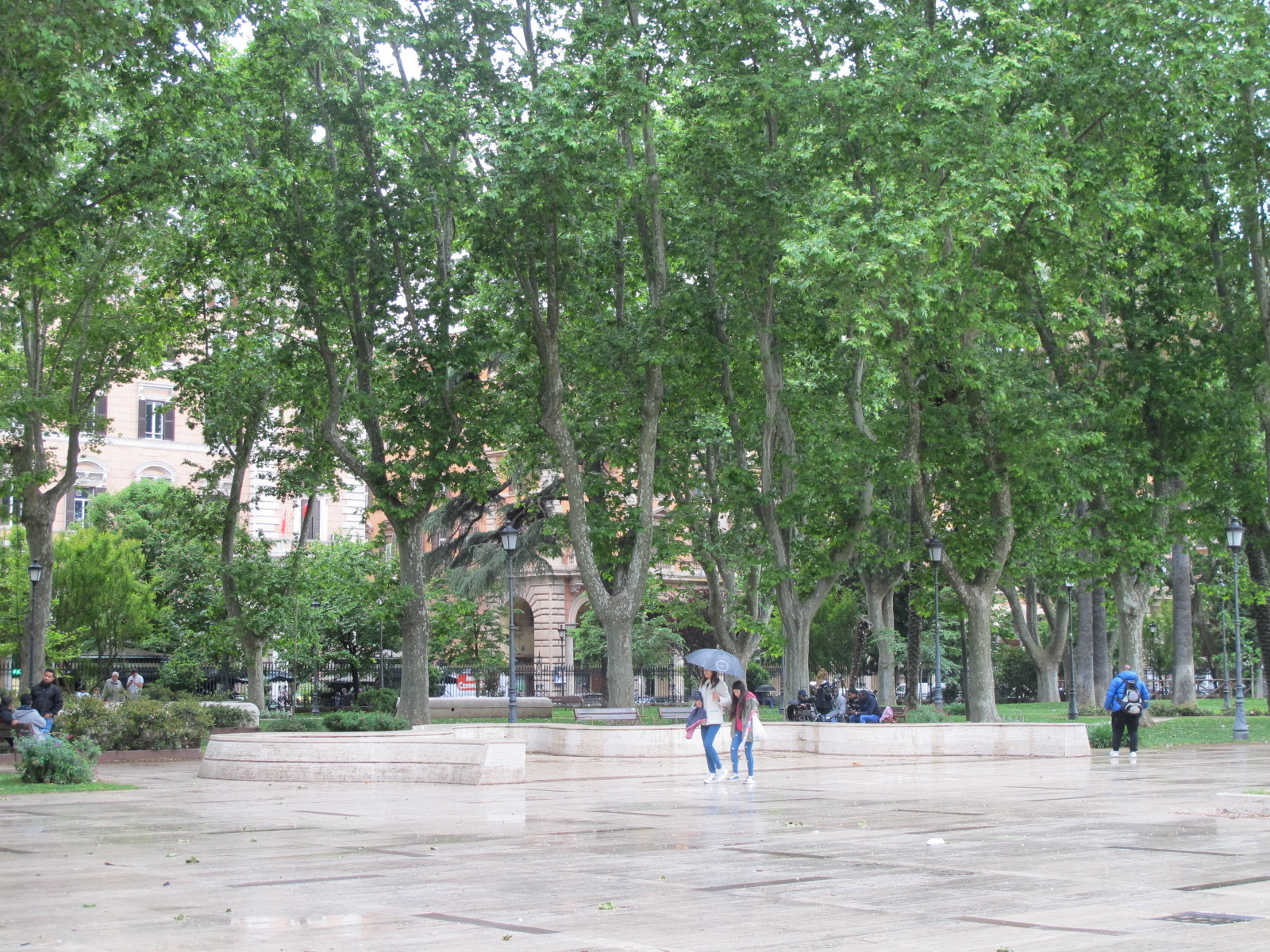
Piazza Vittorio is a significant locale in Rome, meriting its own metro station. It’s on Line A, just four stops away from the apartment.

 The Spanish Steps Apartment on Via della Mercede