
There are some memories that lodge in your brain that you can’t shake. Years ago I read a very short article about frescoes in a bar on the Via Veneto that depicted an unusual lady. That memory stayed with me for the last fifteen years or so. It took me a long time to get there, but finally here I am, and there she is.
The names of the bar and the hotel that houses it, have changed several times over the years. Back when the frescoes were painted in 1926, it was the Hotel Ambasciatori. Today it is the Grand Palace Hotel, at Via Veneto 70. Cadorin Ristorante is named after the Venetian artist, Guido Cadorin, who painted the frescoes.

The frescoes immortalize glamorous and wealthy people in fancy clothes, all clearly enjoying a fun and elegant evening here at the hotel. You can almost hear the jazz playing, and the murmur of the voices as they call to each other, catch up on gossip, flirt, smoke, laugh, and drink.


The women’s hair is bobbed, their strands of pearls are long, and one woman’s dress is in serious danger of slipping off to reveal her breast. The gentlemen all wear tuxedos, their hair is slicked back, and one is kissing a woman’s hand. The men and women look out from balconies around the room, held up by twisted columns, so you feel like this splendid party is going on all around you.

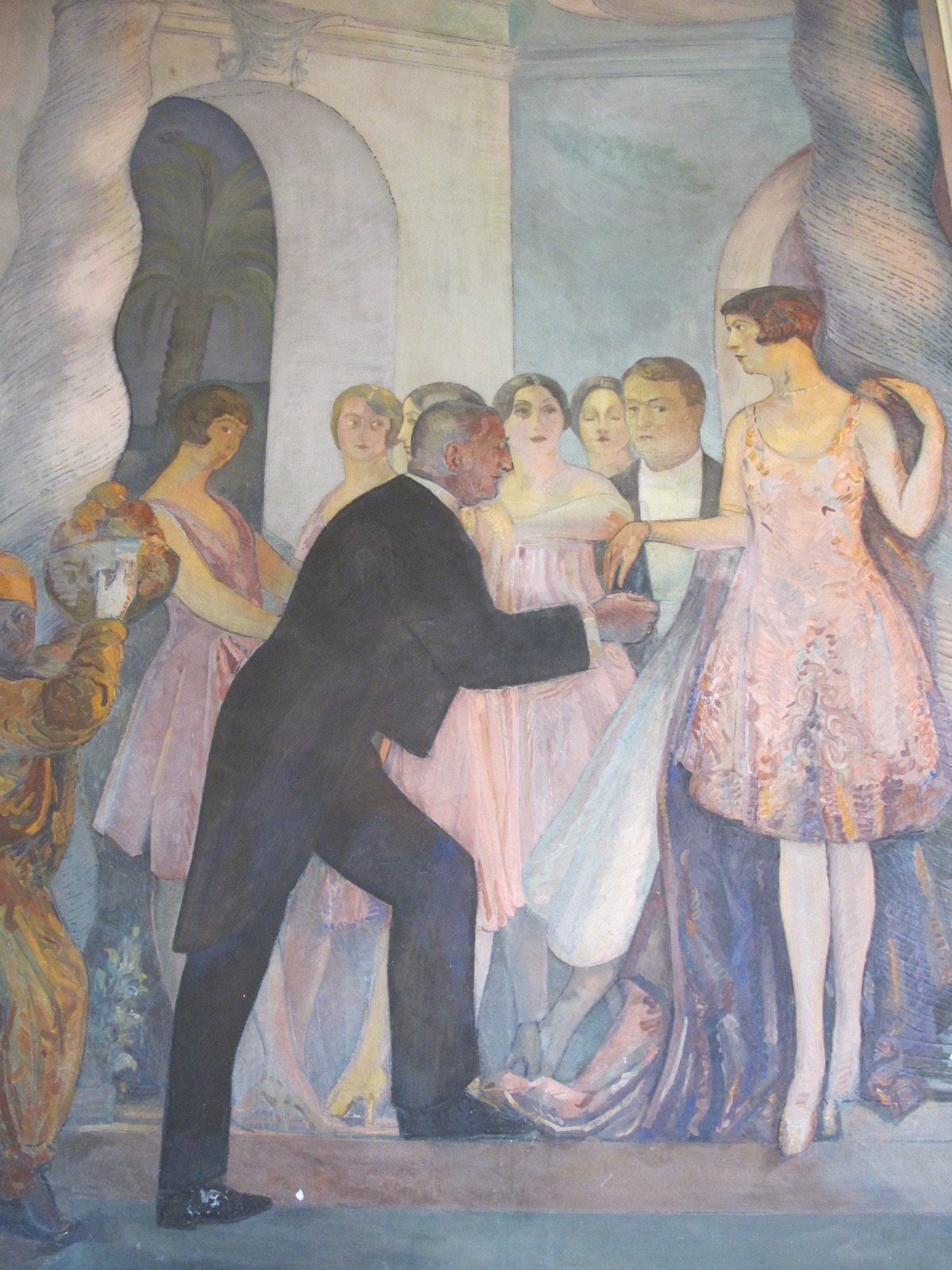


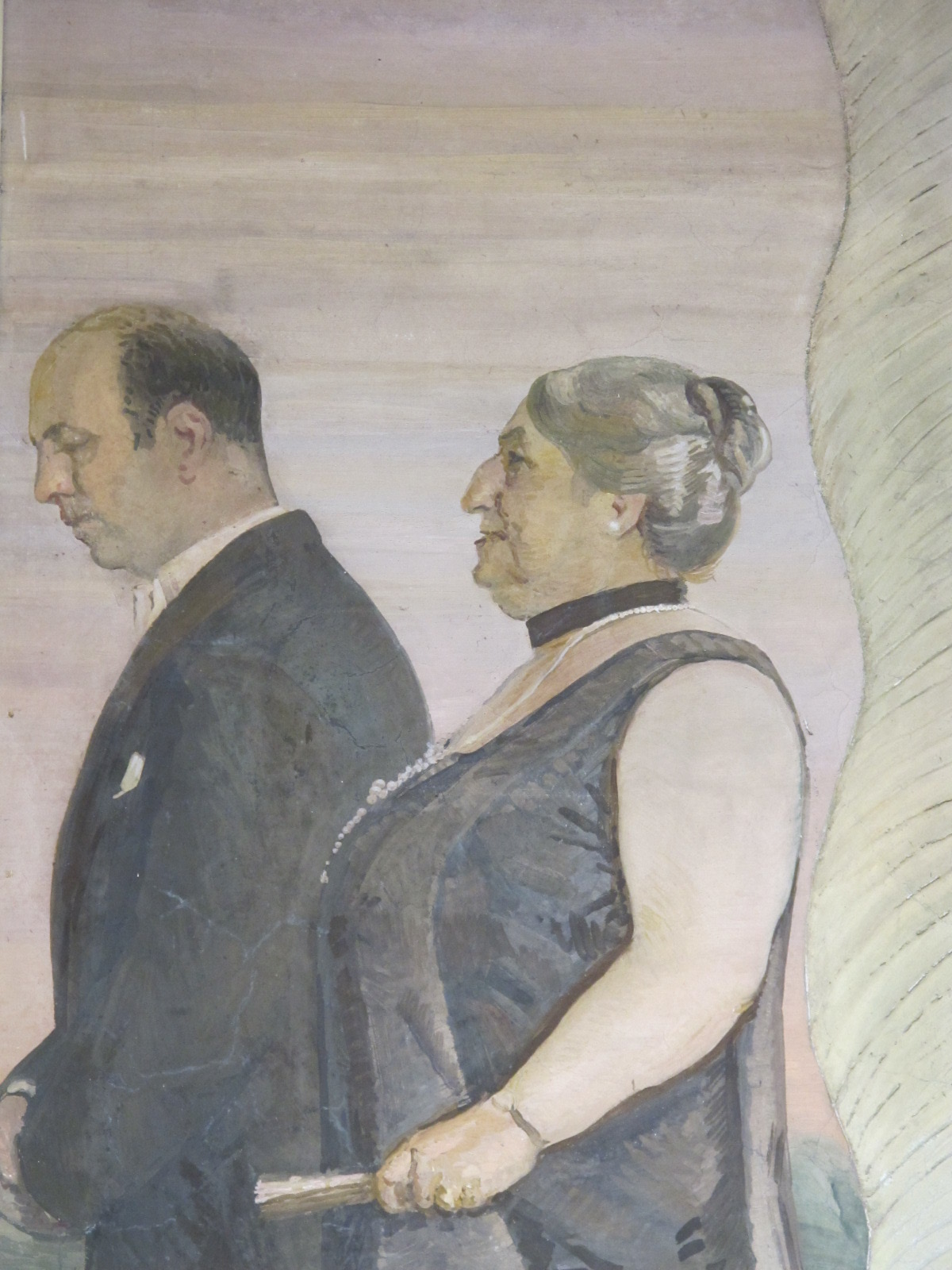
Entertainment apparently included an Indian fortune teller, and several practically nude female dancers.

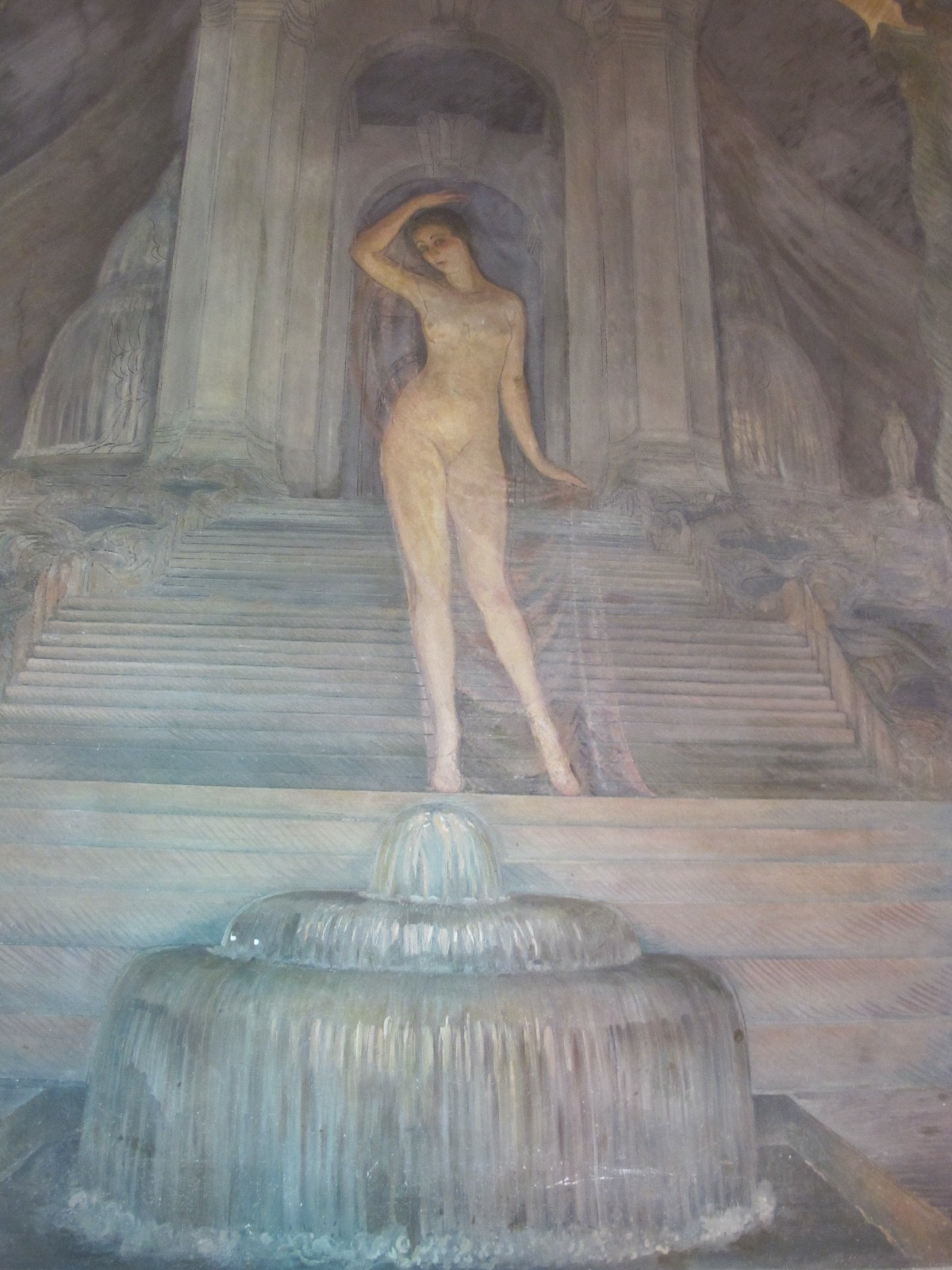
One woman clutches her little white dog to keep it safe from what appear to be two exotic serval cats on leashes who have just made an appearance. It truly looks like one hell of a party.


It is ironic that one of the women depicted in the frescoes would soon find that these good times were fleeting, because she was Mussolini’s mistress, who also happened to be Jewish — Margherita Sarfatti.
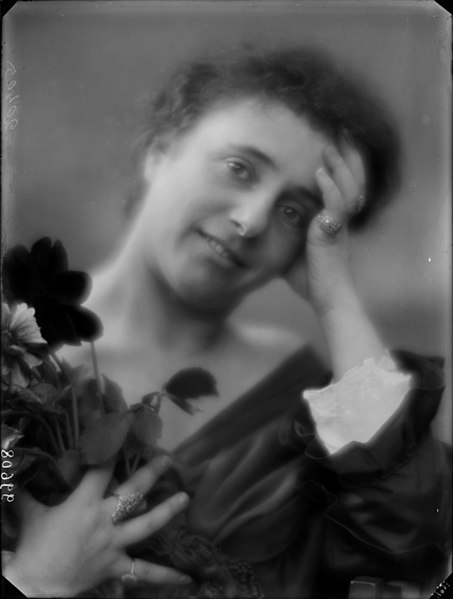
Madame Sarfatti, an intellectual and prominent art critic (and the author of a biography of Mussolini) is pictured with her pretty daughter, Fiammetta.

Legend has it that a few years after the frescoes were completed, Mussolini ordered them covered with curtains to avoid criticism by his anti-Semitic followers. Perhaps sensing what was to come, Madame Sarfatti — one of the lucky ones — left Italy for South American in 1938. She returned to Italy after the war. I wonder if the rest of the party goers were so lucky.
As I always say, the past is always present in Rome, and this room feels alive with these elegant people, now long dead, watching us have our pleasant lunch. The hotel desk was kind enough to lend us a brochure that identified some of the people depicted in the frescoes. We read it while enjoying some cocktails of our own (the fresco partygoers were doing it, after all!) and a very nice meal that included a superb cheeseburger.
But, to our surprise, something else was going on. There was a small team of people photographing and working on the frescoes.

Talk about incredible timing. A member of the team was happy to chat for a moment and told us this was the very first day of a conservation project for the frescoes. It is scheduled to be completed within a few months. So, the next time we go for a drink (and probably another good cheeseburger) with Mussolini’s mistress, she and her friends will be even lovelier than ever. Somehow I think they’d all be pleased by that.
*Reference to the 1999 “semi-autobiographical comedy-drama war film” directed by Franco Zeffirelli.

 The Spanish Steps Apartment on Via della Mercede