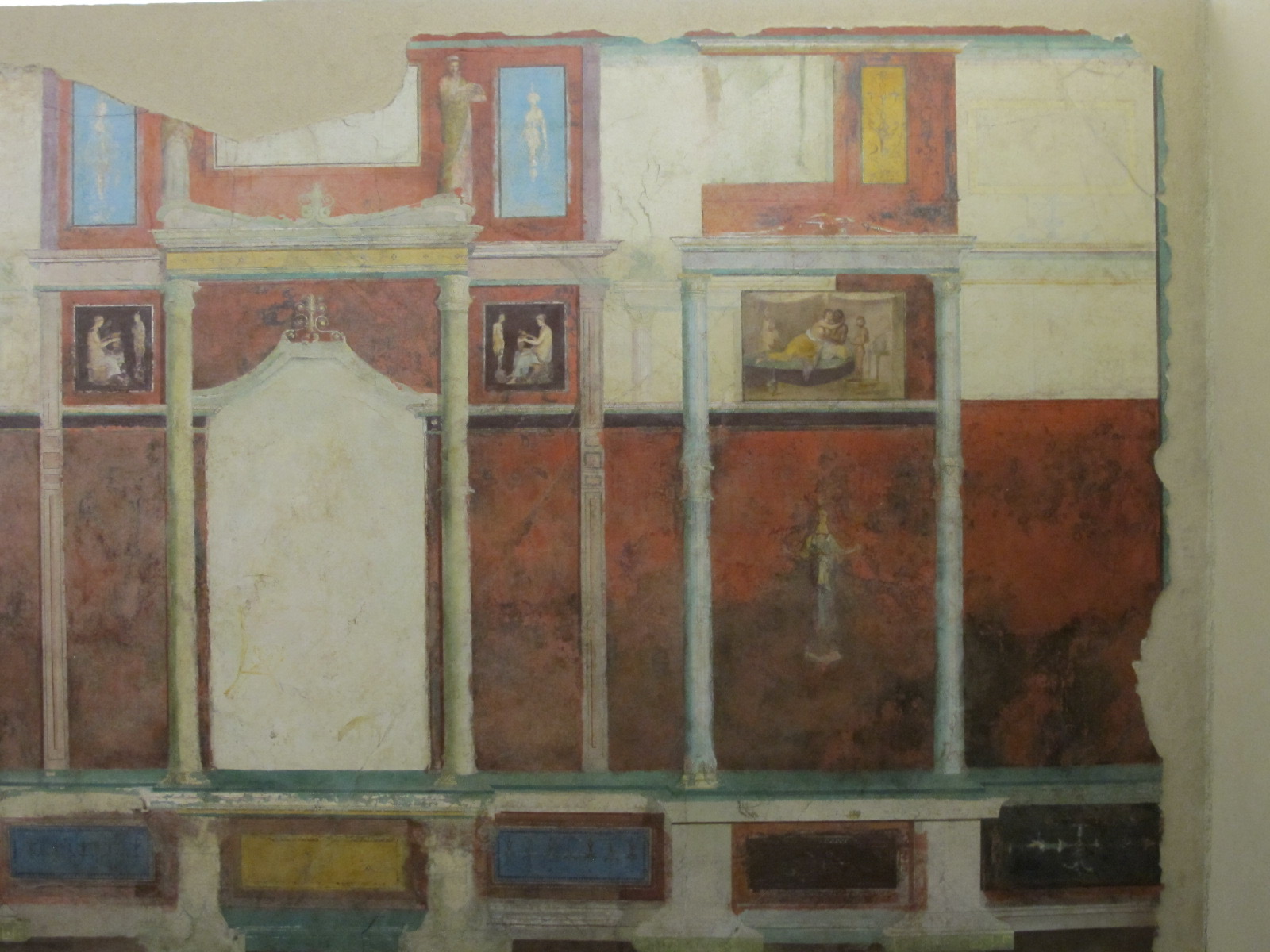
Besides sculpture and mosaics, Palazzo Massimo is also home to many amazing ancient Roman frescoes.
There are entire walls of glorious frescoes. Some of these frescoes come from an ancient Roman villa found in Trastevere — a villa that may have been owned by my favorite Roman, Agrippa.
Palazzo Massimo was found in the late 1800’s during the construction of the massive embankment walls built to control the Tiber flooding, near the Renaissance-era Villa Chigi (now Villa Farnesina).
One room of that ancient villa had frescoes with a white base.


Some of these frescoes have amazingly rich colors, even after all these years. There is one room with three walls of glorious frescoes with a deep red-orange cinnabar base. Seeing these three walls together, as they were meant to be, immerses you in the feeling of what these richly decorated rooms were like.


If you look closely at the photo at the top of this post, also shown here, you’ll notice that the little “painting” in the fresco on the far right depicts an amorous scene (not that Agrippa needed any help in that department, having fathered nine children).

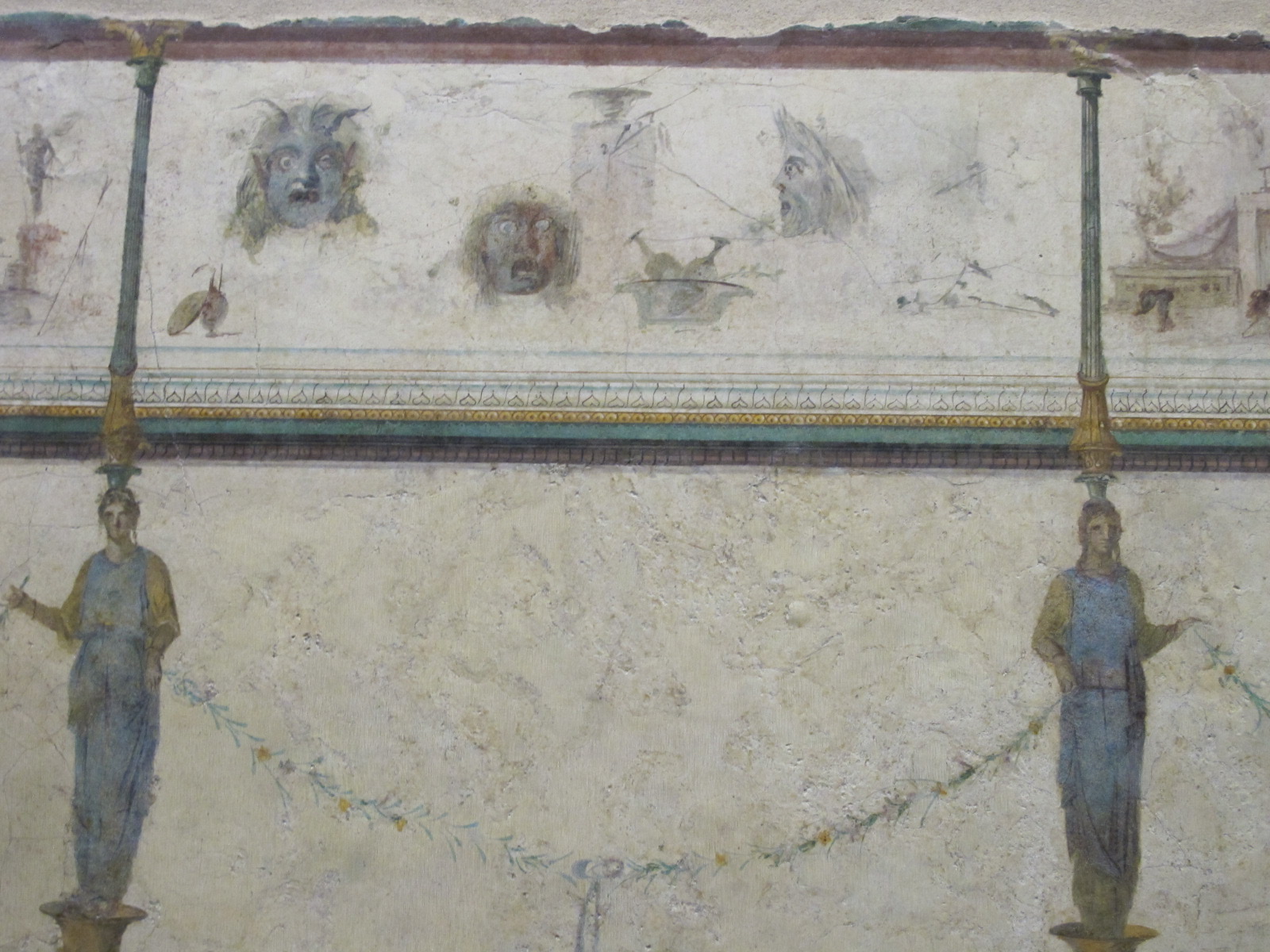
Another fresco from the same villa has a black base, and was used in the dining room (triclinium). Black walls were good for evening dining since they did not easily show marring from lamp smoke. The black walls could also absorb heat during the day, keeping the room a little warmer in the evening, meaning they may have been intended for winter use. Apparently, the little frieze with figures above the garlands depicts, of all things, famous legal cases (why legal cases would be conducive to enjoying a nice meal remains a mystery known only to the ancient Romans).


Of course, the most marvelous fresco in Palazzo Massimo deserves its own blog post. Stay tuned.

 The Spanish Steps Apartment on Via della Mercede