
One of Rome’s most ancient and beautiful churches is Santa Cecilia in Trastevere. Saint Cecilia, the patron saint of musicians, lived in a house over which the church was built. The first church here was built in the 3rd century; today’s church has numerous elements that were added over time, with a facade from the 18th century.
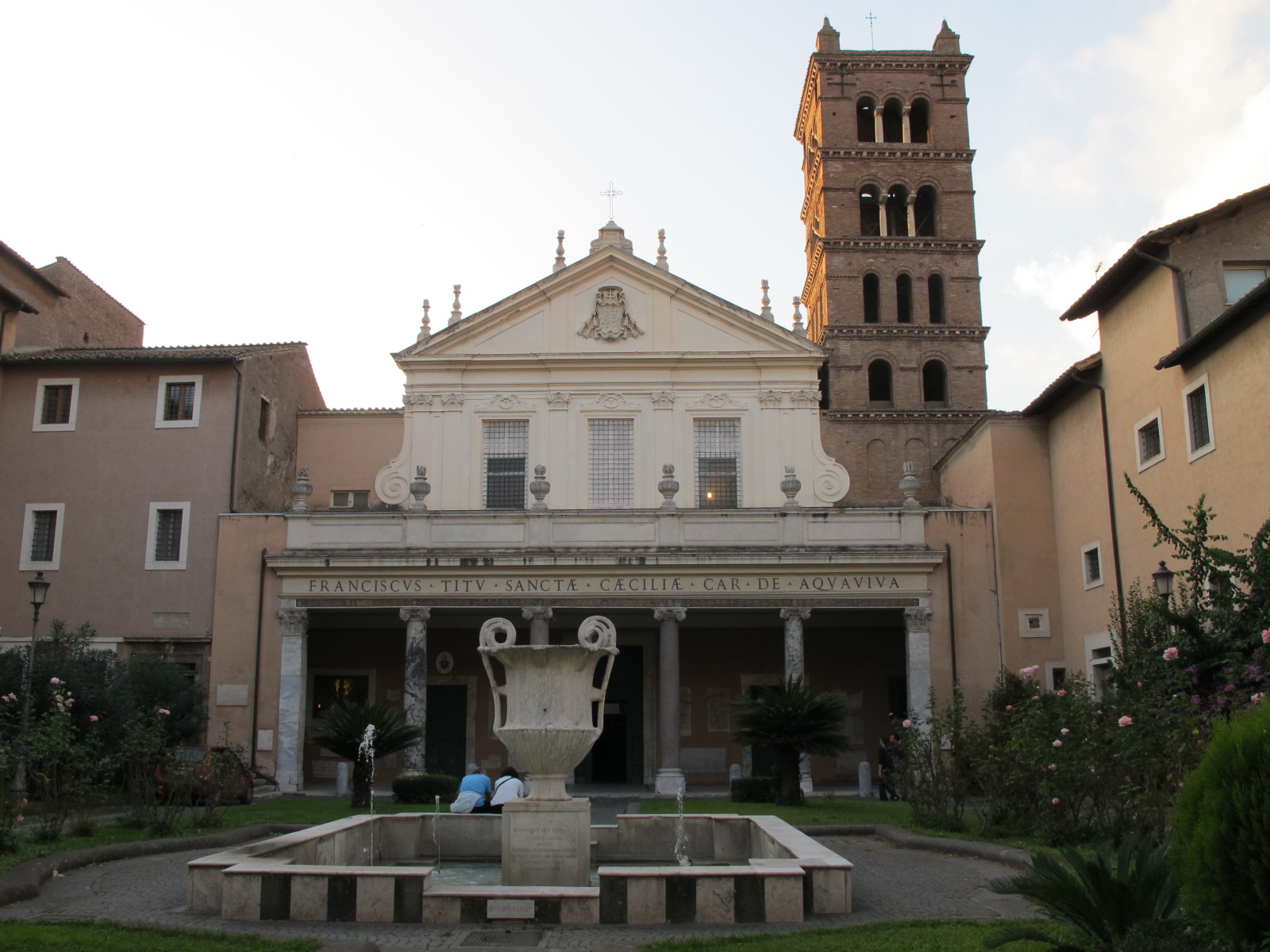
You enter the church through a lovely courtyard, with flowering plants and a giant, classical urn in the center, and a bell tower to one side. It’s simply gorgeous.

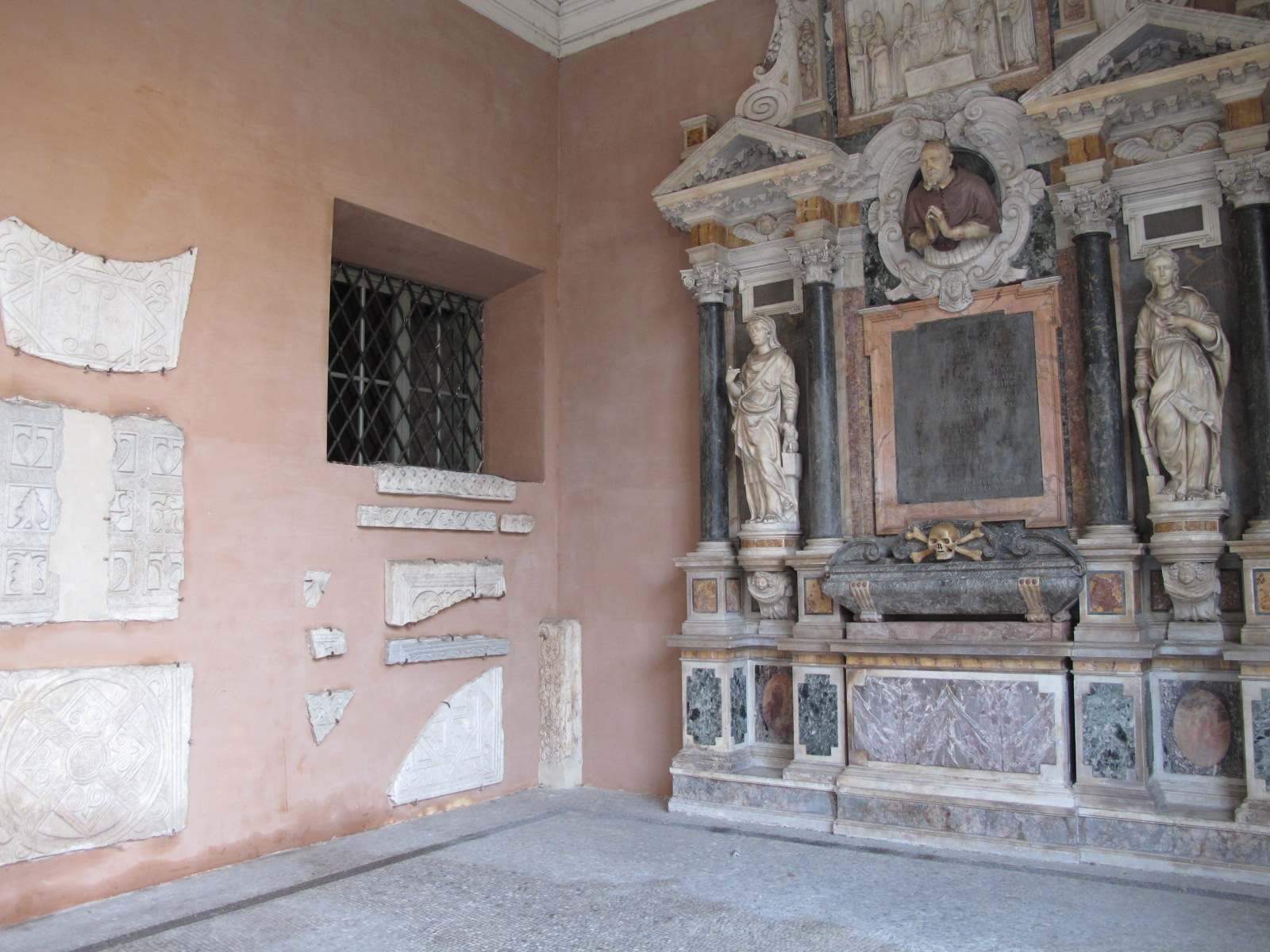
The church’s portico is decorated with all sorts of interesting bits of ancient architectural elements and plaques.
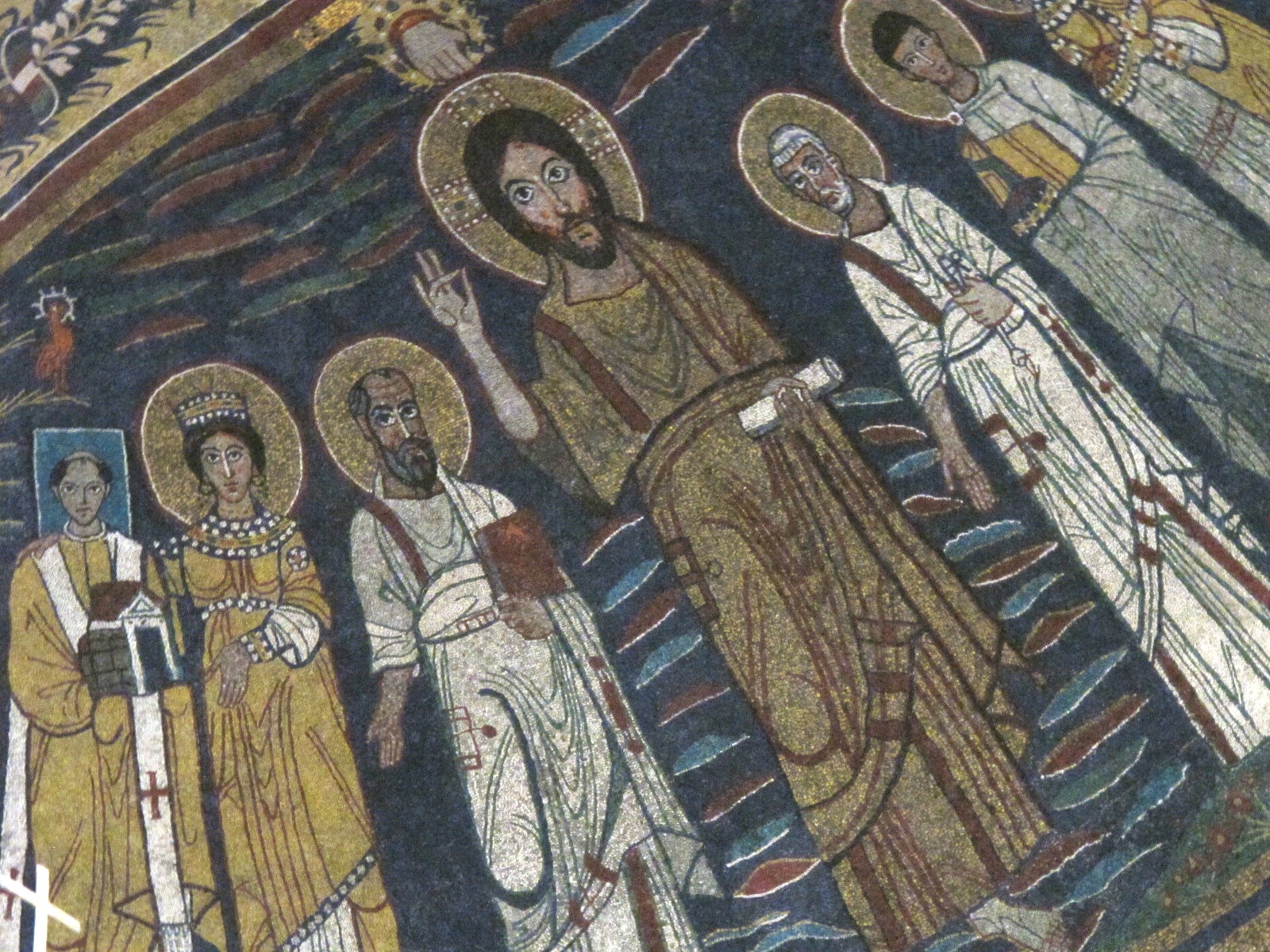
Inside, it’s a magnificent church, with a particularly amazing mosaic dating back to the 9th century over the apse.

There’s also a beautiful fresco of the Last Judgment dating from 1293 by Pietro Cavallini. One of the interesting things about Santa Cecilia in Trastevere is that here you can study the contrast in artistic style between the 9th and 13th centuries.

Cecilia was a virgin (despite being married) who was martyred in the 3rd century C.E. A swordsman tried three times to hack off her head but failed to kill her. It took three days for her to die. It is said that centuries later, her corpse was viewed and found to be “incorruptible,” that is, perfectly preserved. After seeing her corpse, the sculptor Stefano Moderna created a piece in marble depicting a woman lying on one side with her graceful hands resting in front. Her face is tuned away, and her head is shrouded by a veil — all to reveal the back of her neck with one of the cuts from the sword. This fine sculpture now resides beneath the high altar.


For those who watched “No Reservations” with the late, great Anthony Bourdain, just outside the church is a place that he referred to as “Restaurant X” (he said he was unwilling to share the name, it was so good) which happens to be Roma Sparita — known for its cacio e pepe (cheese and pepper) pasta, served in a bowl made of fried Parmesan.

 The Spanish Steps Apartment on Via della Mercede