
On this day in 31 B.C.E., a great naval battle was fought and changed the course of history.
The outcome of the battle of Actium set Octavian on his way to becoming Caesar Augustus, the first Emperor of Rome.
Off the coast of Greece, at the promontory of Actium, Octavian’s fleet, under the command of Marcus Agrippa, defeated Mark Antony and Cleopatra. The battle was the culmination of a soap-opera-like web of political intrigue and adultery.
Love and Politics
After the death of Julius Caesar, the Roman republic was ruled by the “Second Triumvirate” composed of Octavian, Mark Antony, and Lepidus (who was eventually nudged out of the way).
Octavian, looking to shore up his power and keep Antony loyal to him, had Antony marry his beloved sister, Octavia.
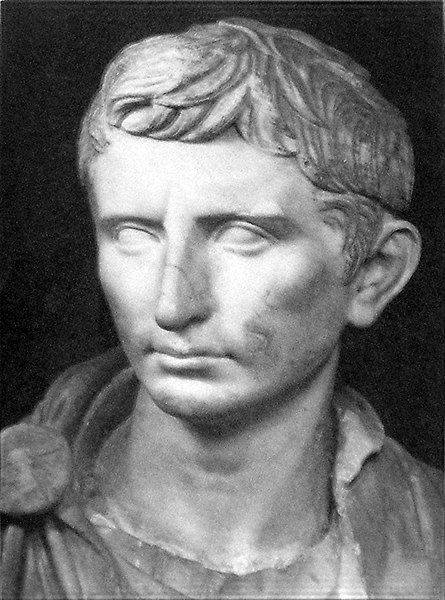


Octavia was considered a lovely and much-respected woman, and she and Antony had several children together. This marriage alliance, however, was not enough to keep Antony loyal to Octavian. Dispatched to Egypt, Mark Antony famously was seduced by the Egyptian Queen, Cleopatra VII.
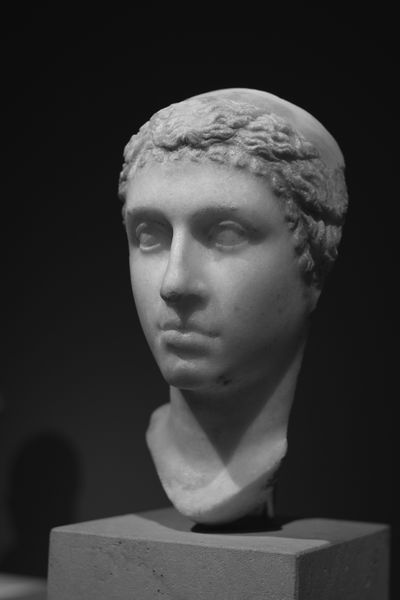
Betrayal
Indeed, Mark Antony apparently forgot his marriage to and children with Octavia, and “married” Cleopatra.

Antony therefore became step-father to Caesarion, her son by Julius Caesar. Octavian was merely Caesar’s grand-nephew and, therefore, Caesarion was a major threat to Octavian.
Antony fathered three children with Cleopatra: the twins Cleopatra Selene and Alexander Helios, and a younger son, Ptolemy. In 34 B.C.E., through the “Donations of Alexandria,” Mark Antony and Cleopatra distributed lands claimed by Rome to Cleopatra’s children. They also granted the children various titles and proclaimed Caesarian the legitimate son of Julius Caesar.
This was the last straw for Octavian. By the end of 33 B.C.E., the triumvirate was over. Soon thereafter, the last civil war of the Roman Republic began.
At Actium, Antony started with a greater number of ships — and larger ones — but he lost many in a clash with Octavian the previous day. Octavian and Agrippa’s ships then maneuvered to trap Antony and Cleopatra: Antony’s fewer but larger ships faced Octavian’s smaller but more numerous ships. There was also infantry on both sides, but Antony and Cleopatra chose to face their enemy by sea rather than land.
During the pitch of battle, Cleopatra managed to flee with her fleet. Antony then broke away from the fighting and followed Cleopatra back to Egypt. Their remaining forces, now leaderless, fought on — but dispirited. Their end was nigh.
But so was Antony’s and Cleopatra’s. It took about a year for the inevitable finale to come. Mark Antony, Cleopatra, and Caesarion were all dead. The setting was in place for the Roman Empire to begin under Augustus.

 The Spanish Steps Apartment on Via della Mercede
