
During my days as an instructor at Berlitz, I met a few linguists. More than one of them told me what most of us call dialects are actually languages. Ask a Neapolitan how well they understand Lombard, and you may well get a shrug.
English is my madrelingua, so I stand no chance at understanding Lombard or Neapolitan.
I was born in Rome and lived here for my first 10 years, so I picked up some Romanesco and “romanisms” without knowing it. It wasn’t until I finally was able to study Italian for real in college when I got to learn the difference between my childhood Italian and Standard Italian.
During your soggiorno in Rome, you’ll be hearing and seeing some Romanesco. A small selection of instances that differentiate it:
- ar instead of Standard Italian’s al means “at the.” The tip off is that, generally, Standard Italian only allows vowels and the letter L to end a word.

- the letter J, as in pajata, the recently re-legalized dish (milk-fed calf intestines), is pronounced like Y in “yes,” or LL of the Spanish language, as in the dish “paella.”
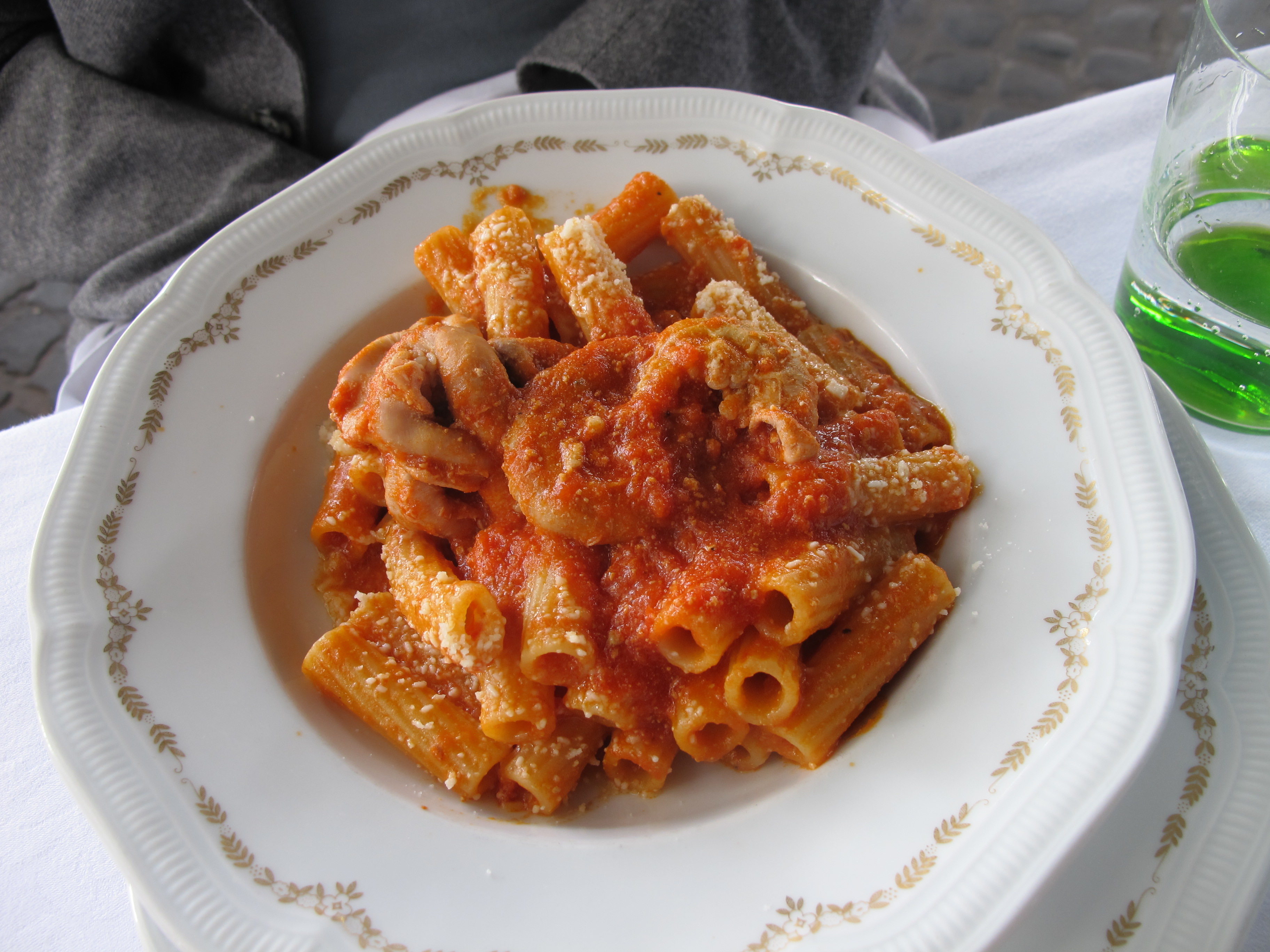
- the morning coffee with steamed milk foam is cappuccino — other regions may refer to it otherwise, such as cappuccio.

- if you’re a student of Standard Italian, this one may trip you up: li instead of the plural masculine definite article i (as in i ragazzi).
- I believed until college that Standard Italian allowed eliding the initial U of indefinite articles — e.g., ‘na instead of una.
Something I’m personally proud to repeat, never mind that it’s a subjective matter, is the saying, Lingua toscana nella bocca romana: Tuscan language in the Roman mouth.

Something about the Roman pronunciation sounds good to the Italian ear, but still noting the history of Standard Italian being drawn directly from Florentine. So if you hear someone dropping their initial U’s or inserting a seemingly extra U or R, give them a smile and say grazie.

 The Spanish Steps Apartment on Via della Mercede