
It looks a bit like the Colosseum, but the Theater of Marcellus is unique. Located in the Jewish Ghetto, not far from the Portico of Octavia, this is one of Rome’s many landmarks.
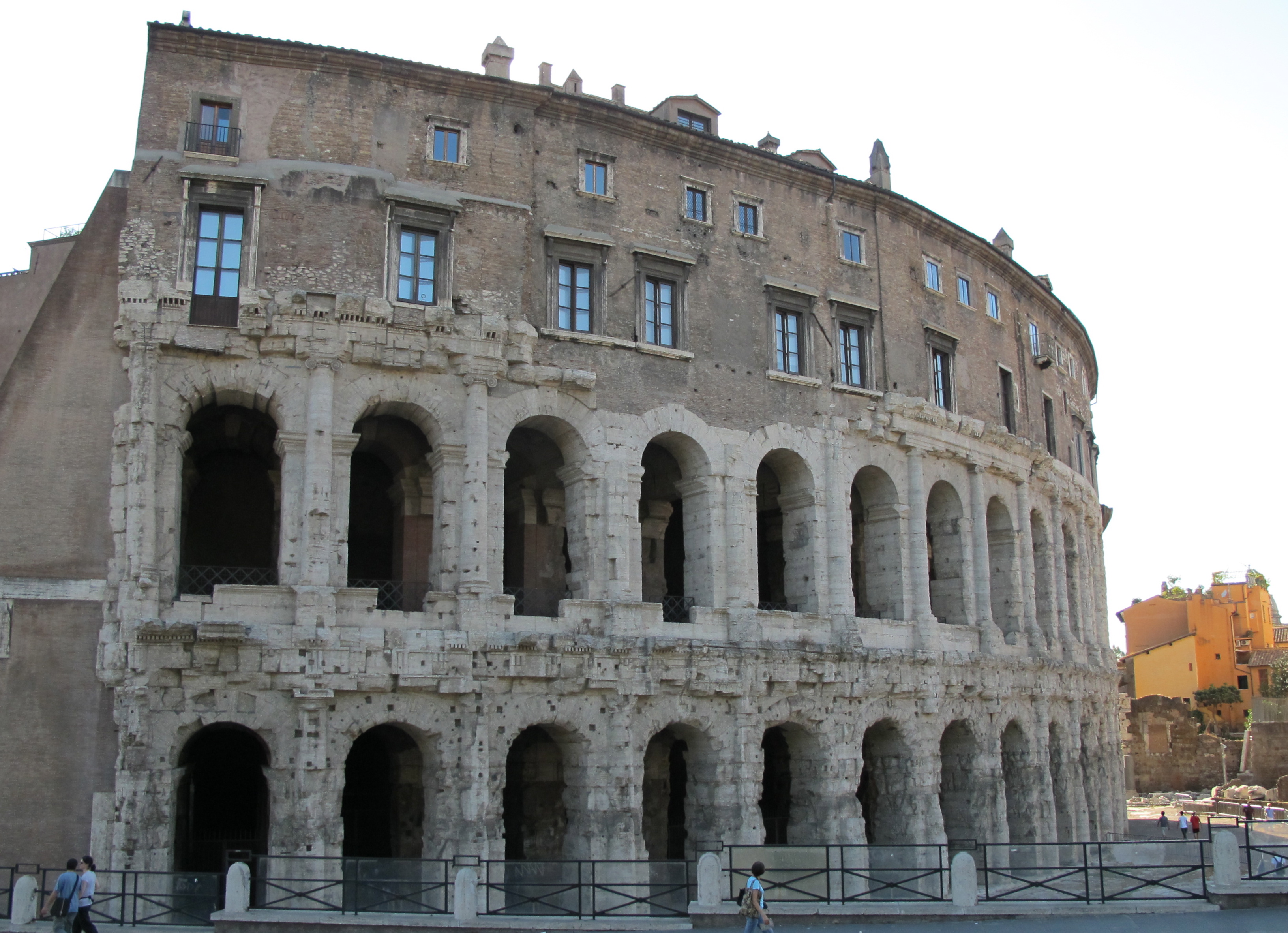
Originally it was (surprise!) an open-air theater for plays or musical presentations. This was one of the largest and most important theaters of ancient Rome, and could hold up to 20,000 spectators. The theater was also one of the first important buildings in Rome to use brick, travertine, and tuff, a local stone.
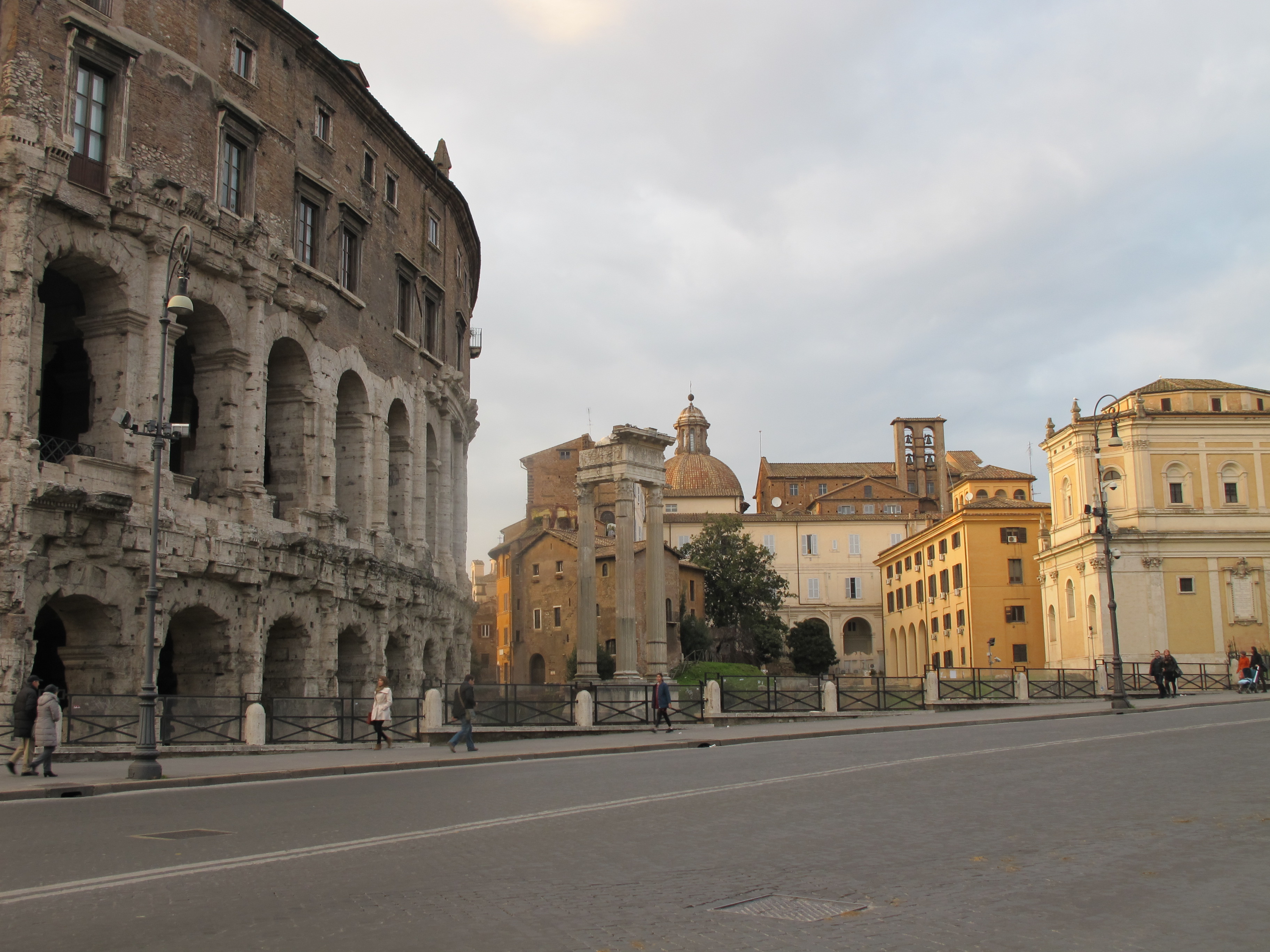
The Theater of Marcellus stands next to the lovely, and poignant, remaining columns of the little Temple of Apollo.

The area immediately surrounding the Theater of Marcellus is full of architectural bits of nearby antiquities — a reminder that this area was used as a quarry in the Middle Ages.

Indeed, the Theater of Marcellus itself was used as a quarry after the fall of Rome. It was later converted into a fortress, and then apartments.

Indeed, some apartments are still there today, on the top floors.
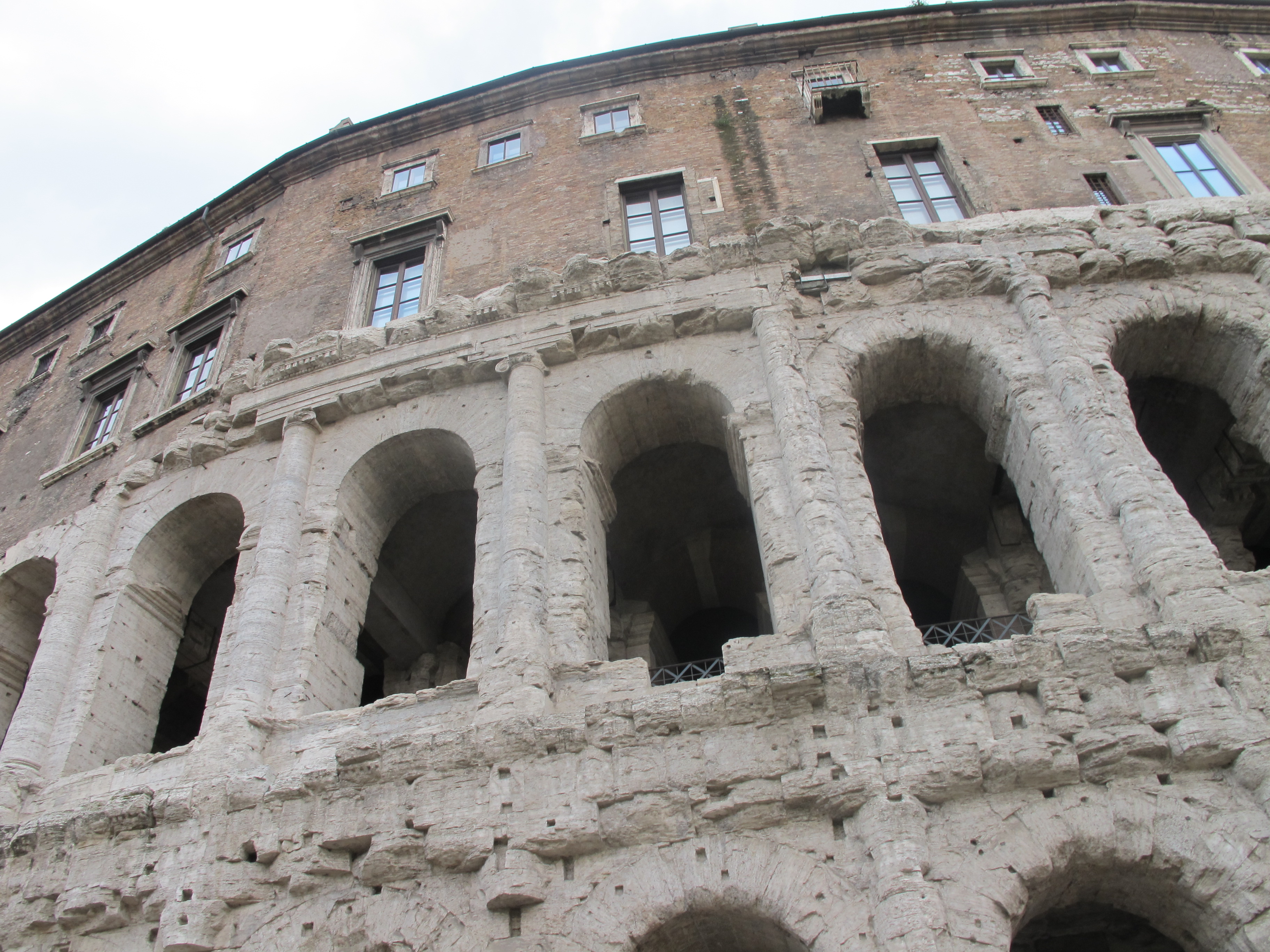

One of the themes I seem to always come back in these blog posts to is how many layers there are of history all through Rome, including recent times. The Theater of Marcellus is no exception. Look closely at one section visible from the street, and you’ll see this:

These are fasces — a reminder of preservation work from another, more recent, era of Roman history, the Facsist period.
Chances are good that when arriving or leaving Rome, you will drive by this splendid sight between the Mouth of Truth and the Capitoline. So keep an eye out for it!

 The Spanish Steps Apartment on Via della Mercede