
Giovanni Battista Piranesi (1720 – 1778) left the world an amazing legacy of etchings of the Eternal City. Piranesi was the son of a stonemason and nephew of the architect and engineer Matteo Lucchesi. Talent clearly ran in this family. He was born near Venice but came to Rome as a young man to serve as a draughtsman for the Venetian ambassador. Installed in Palazzo Venezia, then the Venetian embassy, he became enamored of Rome and set out to capture it in his detailed and emotive etchings.

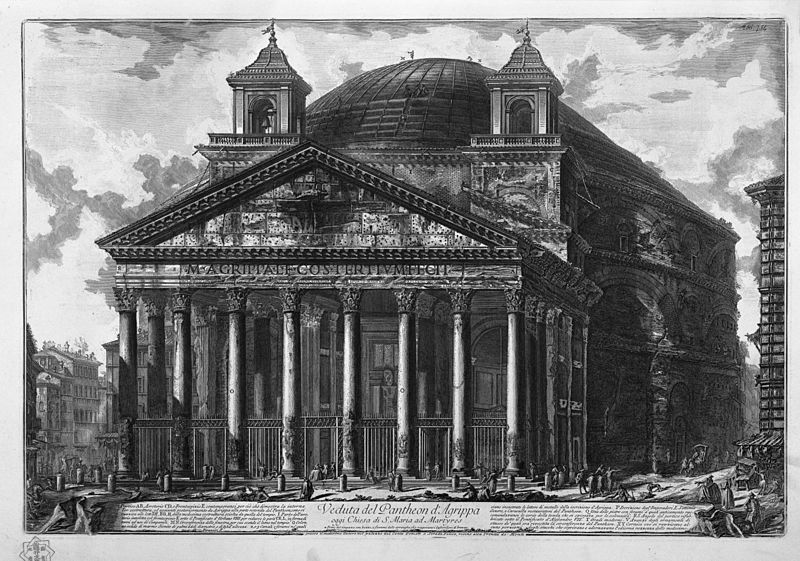
His many vedute (views) of Rome are both beautiful as art, but also preserve a snapshot of Rome in his time. For example, his view of the Pantheon captures that magnificent building at a time when it was not quite so magnificent: when the awkward twin bell towers were installed (fortunately, they were pulled down shortly afterwards).
The inside view of the Pantheon, however, shows it as beautiful as ever.

He captured the sweeping grandeur of the Colosseum.


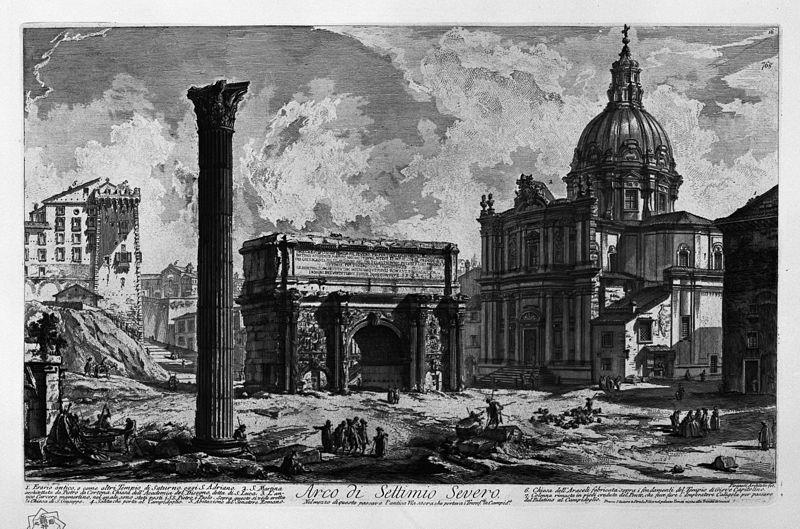
Of course, he captured some romantic views of the Roman Forum.

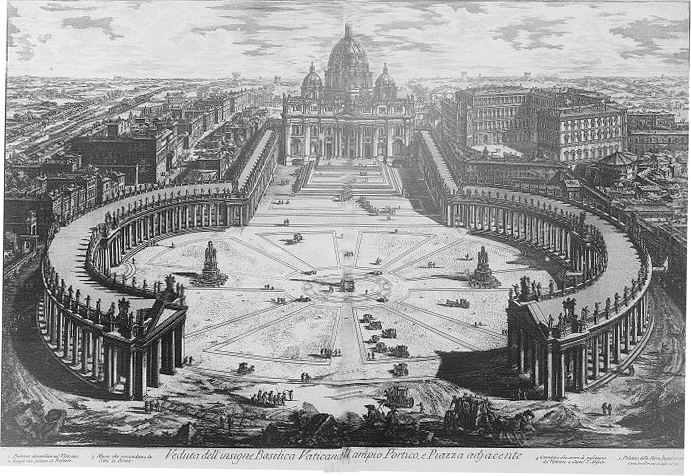
He also did a beautiful etching of St. Peter’s.
His view of the Pyramid of Cestius (top of this post) is perhaps my favorite, since I have a deep affection for it since it backs on the cemetery where my father is buried.
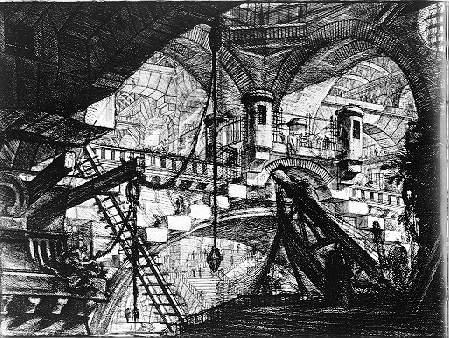
Piranesi’s work was particularly suited to his time: his romantic etchings of Rome became a favorite of the Grand Tour set, and helped fuel the Neoclassicism art movement. Interestingly, his lesser-known works of “imaginary prisons” went on to inspire Surrealism and the work of M.C. Escher.
Piranesi died in 1778 and was buried in his beloved Rome, at Santa Maria del Priorato. This little church, owned by the Knights of Malta, is the only building Piranesi worked on as an architect.

 The Spanish Steps Apartment on Via della Mercede
One thought on “The Engraver of Rome”
Comments are closed.