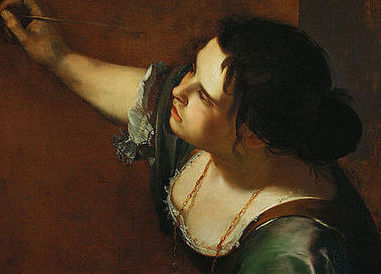
If you haven’t heard of Artemisia Gentileschi, she was an accomplished and well-respected Baroque period painter who truly deserves recognition. Born in Rome in 1593, this incredibly talented woman painted Susanna and the Elders at the age of just 17. Alas, this art piece is not in Italy.

Artemisia lived through tragic events as a young woman. Her mother died when she was young, leaving her as the only woman in her family. She was raped by her painting teacher, Agostino Tassi, in her teens. She subsequently entered into a sexual relationship with Tassi in the hope he would marry her and therefore “preserve” her reputation. But Tassi refused to marry her, so her father filed legal charges against him. Artemisia was then subjected to not only a gynecological examination but also torture inflicted to “ensure” her testimony was truthful. While convicted and sentenced to jail, Tassi was never actually enprisoned.
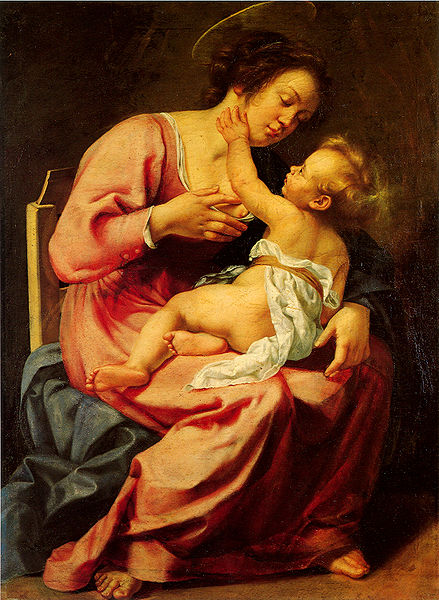
Eventually, her father married her to a Florentine painter, so she moved from Rome to Florence. There, a daughter was born, and Artemisia enjoyed considerable success as a painter. Her sweet Madonna and Child, now in Rome’s Galleria Spada, dates from this happy time in her life.
Her marriage soured, however. Artemisia returned to Rome with her daughter in 1621. She would eventually move to Venice, Naples, and London in search of more lucrative commissions. She remained active until her death in 1653.
There is little doubt that the rape and the other difficult events in her life affected Artemisia’s art: they made her stronger. You see it over and over again, in her depiction of strong and active women, often from the Bible.
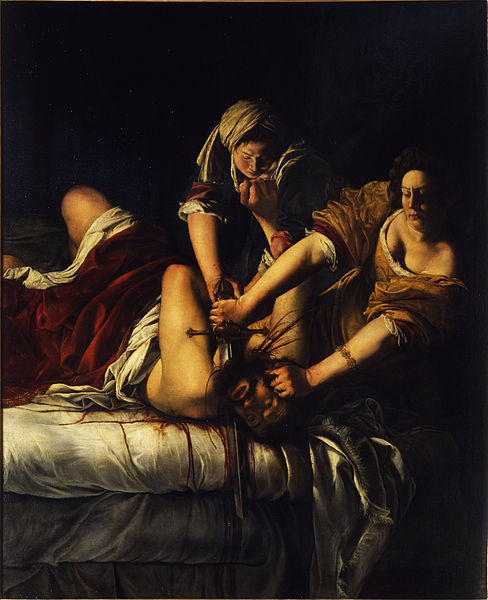
Probably her most famous work, Judith Slaying Holofernes, was clearly influenced by Caravaggio. It now resides in the Galleria degli Uffizi, Florence.
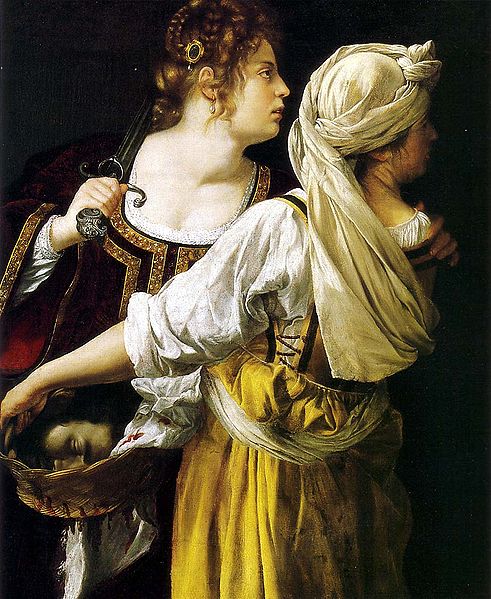
Palazzo Pitti, in Florence, has the honor of housing Judith and her Maidservant.
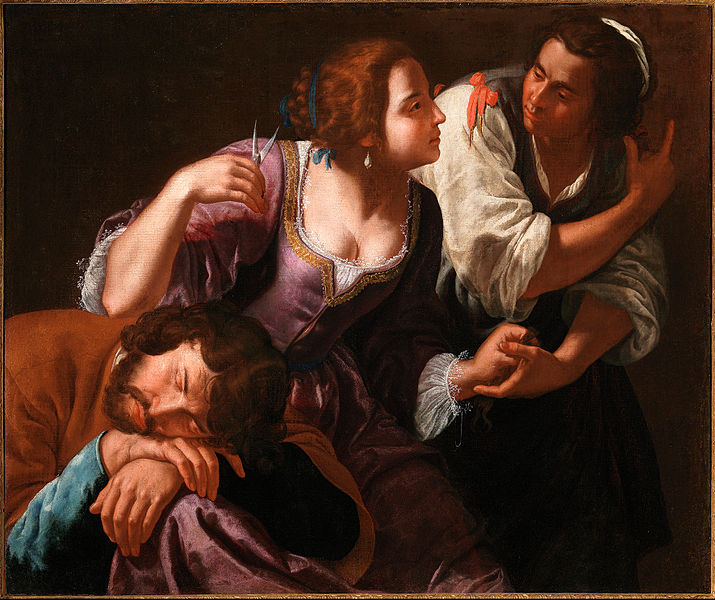
Samson and Delilah is at Palazzo Zevallos Stigliano in Naples.
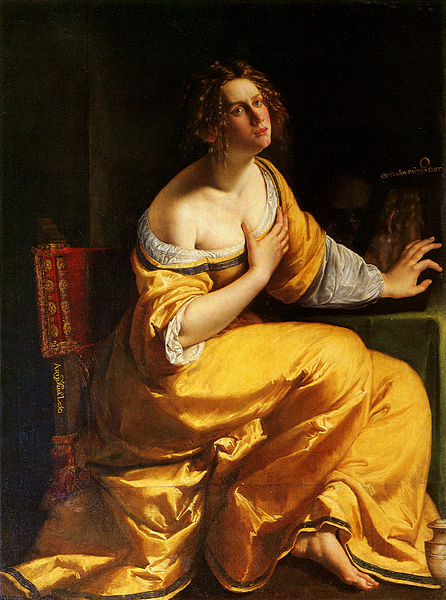
I think this portrait of Mary Magdalene says it all (also at Pitti Palace). This is no teary, repentant woman gazing dreamily at heaven while covering herself with her flowing locks. Instead, the (allegedly) former prostitute is defiant, making direct eye contact with the viewer. There is nothing dainty about this lady: her hands and bare feet are large, she’s physically strong. She is clearly not a woman to be trifled with.
The portrait at the top of this post is an allegory of painting, showing a passionate and strong woman in action. It’s Artemisia herself, in a self-portrait, looking much like her heroines.
From November 30, 2016 through May 8, 2017, the Museo di Roma will be hosting an exhibition of Artemisia’s work. Don’t miss this opportunity to see the work of a great Roman artist.

 The Spanish Steps Apartment on Via della Mercede